A men’s lace hair system uses an open mesh base that prioritizes air flow and a soft hairline when knots and adhesive are managed. A men’s mono (monofilament) system uses a fine woven top that can carry durable styling and often reads fuller at the same density percentage than lace or thin skin. This page separates that durability / visual-density fork from the lace-vs-thin-skin cleanup fork, so you do not buy “mono” thinking it is simply thicker lace.
We compared public merchant base education and category pages — not private wear-tests — around breathability, how density percentages translate across bases, durability framing, and when mono constructions show up in Afro / kinky stock lines. Specs below are Public specs (as published; verify on brand site).
Public specs comparison
Public specs (as published; verify on brand site).
| Dimension | Lace (Swiss / French / lace front) | Mono / monofilament tops |
|---|---|---|
| Base look | Soft mesh hairline potential; knots must be managed | Fine woven top; can look fuller / more “there” at the same % |
| Breathability | Typically high | Typically lower than open lace; depends on mono grade and perimeter |
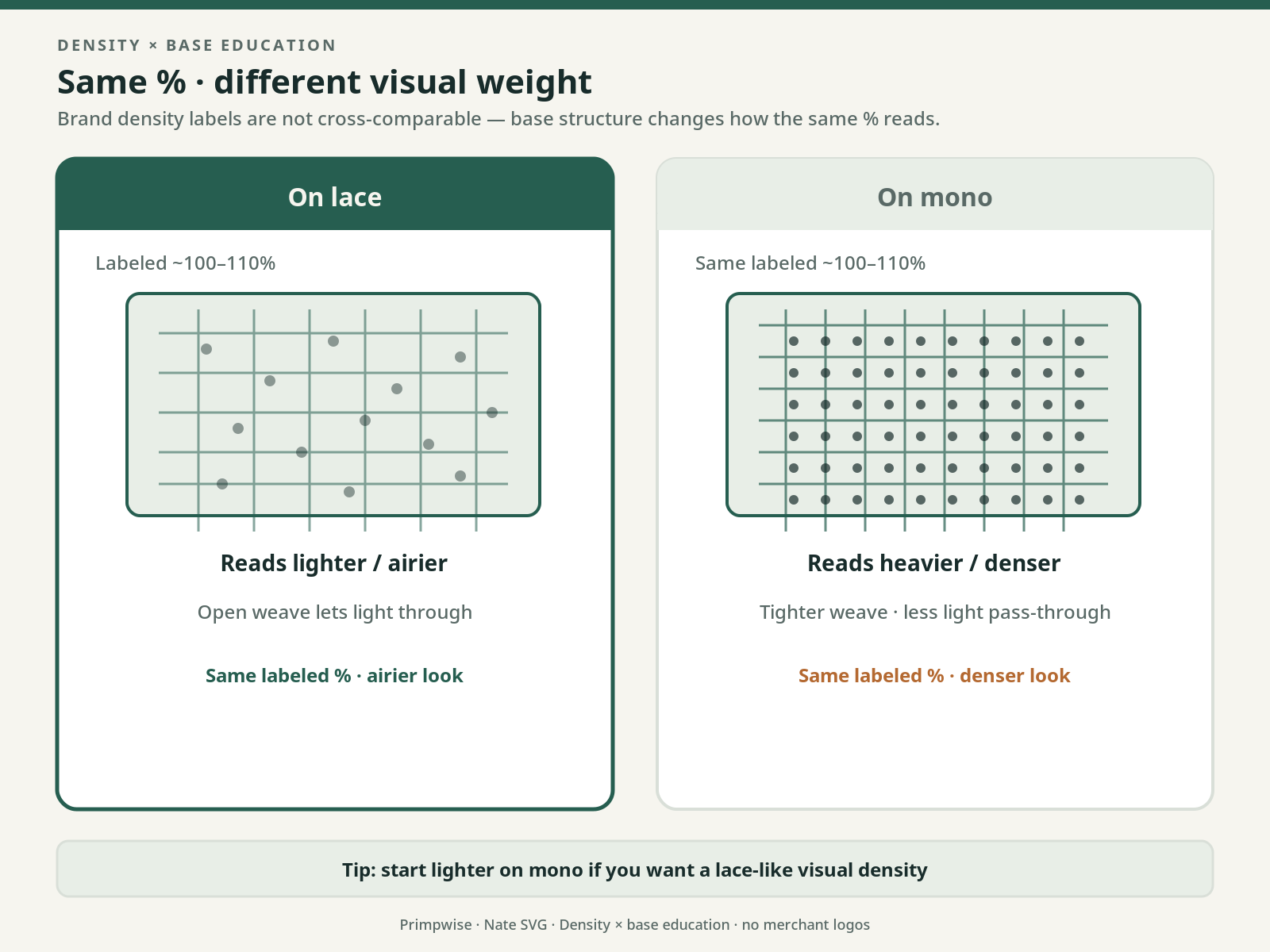
| Visual density | Same % often reads lighter than on mono | Same % often reads heavier — brand guides warn against cross-base % matching |
| Durability (public framing) | Delicate mesh; adhesive technique drives wear | Often framed for longevity and styles that need hold |
| Best if… | Heat, sport, hairline-first realism | Longevity / fuller styles; some Afro/kinky stock constructions |
| Watch-outs | Tear risk on lace edges; knot visibility | Can look wiggy if density is already high; less “airy” feel |
| Shop starting points | Lordhair lace · Superhairpieces lace · LaVivid lace | Brand mono / Afro mono lines — verify live (e.g. Lordhair Afro hub mono tiles; SHP mono listicles); LaVivid custom when stock mono options do not fit |
Superhairpieces’ public density education is explicit that the same density percentage looks lighter on thin skin / Swiss lace and heavier on mono, and that brand percentages are not cross-comparable (SHP density guide). For stock thin-skin / film-base examples used when teaching density perception off mono, Superhairpieces’ bestsellers education is a useful public surface (SHP thin-skin bestsellers). Lordhair’s public skin / lace / mono framing treats mono as a durability and density carrier alongside lace breathability and skin edge realism — re-check the live base ladder on a concrete stock card before ordering (Lordhair SuperSkin-V base notes). LaVivid’s cost education discusses monofilament alongside lace and skin price bands as published categories (LaVivid cost article).

For the wider multi-brand men’s hub, see the men’s hair system shortlist.
If breathability and a soft hairline dominate → lace
Choose lace when heat, sweat, and close-range hairline realism are the primary objections. Mesh is the usual answer when a unit must survive workouts or humid days without feeling sealed. The cost is care: lace edges tear more easily under rough adhesive removal, and knots can show if unmanaged.
Editorial bias for lace-over-mono:
- Do not “fix” a flat look by jumping density on lace the way you might on mono — start light / light–medium and cut carefully.
- If you need poly where tape sits, look at lace-front hybrids rather than assuming mono is the only durable option.
- Pair this branch with lace collection CTAs, not mono hubs.
Shop lace: Lordhair lace systems · Superhairpieces lace systems · LaVivid lace systems
When lace is locked and you need brand-level lace SKUs (not the mono fork), use the companion best lace hair systems for men roundup.
If durability, fuller visual density, or coil-holding constructions dominate → mono
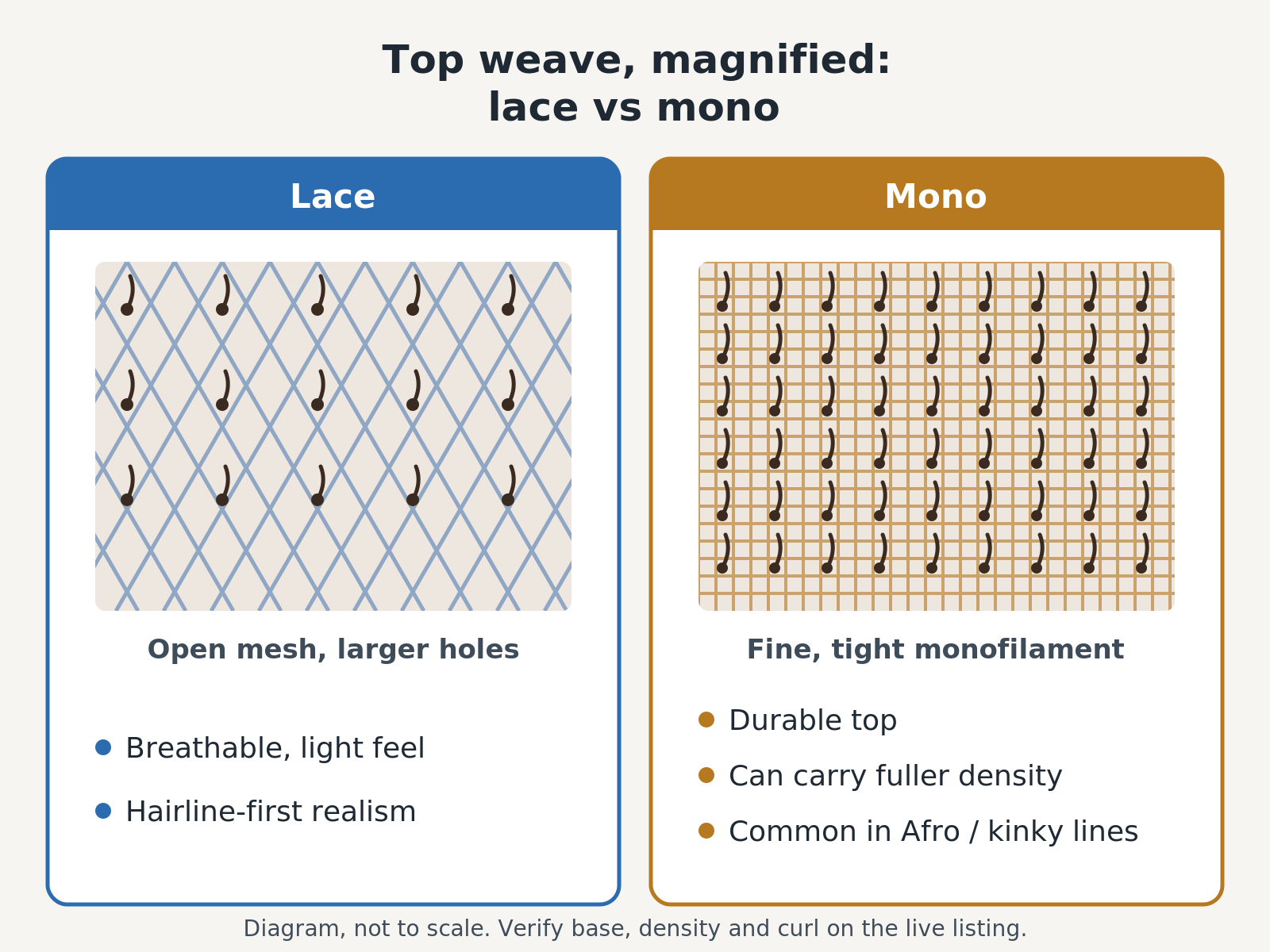
Choose mono when published durability and the ability to carry a fuller look matter more than maximum mesh breathability. Community and merchant education both warn that mono can make the same percentage look denser — useful when bio hair is thick or a style needs hold, risky when bio hair is fine and the goal is invisibility.
Editorial bias for mono-over-lace:
- Order lower printed density on mono than you would on lace if the goal is a natural blend.
- For Afro / kinky coils, mono or dedicated Afro stock lines often appear in brand catalogs because coil definition and medium-density expectations differ from straight-fiber lace — verify curl diameter and color on the live listing rather than forcing a straight lace SKU.
- Confirm perimeter construction (mono top + lace front, mono + poly edge, etc.) — “mono” on a product card is not one universal base.
Shop / research mono paths: Lordhair Afro hub (skin / lace / mono examples on public tiles) · Superhairpieces men’s hub · LaVivid custom when you need a made-to-measure mono or mixed perimeter
Afro / men×black depth is a conditional branch here, not a separate deep vs URL in this batch — match curl and density on live catalogs, and prefer barbers who have cut systems before.
Density mistakes hit mono harder
Because mono often reads fuller at the same printed percentage, over-density is a frequent path to a “wig on top of the head” look — the same unnatural-look theme that shows up across men’s systems generally. Public education from major sellers leans lighter for first units and stresses that curly or Afro texture also looks fuller at the same percentage. Editorial rule: if bio hair on the sides is fine or thinning, prefer light / light–medium language on mono and verify with photos; if bio hair is naturally dense or the style needs hold, medium can be justified — still confirm on the live listing.
Color mismatch and an unfinished cut will still betray either base. Mono does not forgive a bad blend; it only changes how density and durability present.
Do not confuse this with lace vs thin skin
Lace vs mono is about air and hairline vs durability and how density reads. Lace vs thin skin is about breathability / soft hairline vs cleanup and scalp-like film edges. If your main friction is tape cleanup or poly shine, read lace vs thin skin hair systems for men instead of forcing a mono order.
Hybrid constructions (lace + poly edges, mono + lace front, and similar) sit between these forks. They are useful when you need different materials in different zones, but they also add cut-to-size and care complexity — do not treat “hybrid” as a free upgrade without reading the base map.
If you still need help sequencing base, density, budget, and install skill, use how to choose a hair system.
FAQ
Is mono better than lace for beginners?
Not automatically. Mono can be more forgiving for longevity and fuller styles, but it also makes density mistakes more obvious. Beginners who prioritize easy cleanup often start on thin skin, not mono — that is a different fork. Beginners who prioritize hairline and breathability often start on lace with professional help on the first cut-in.
Why does 100% density look different on mono vs lace?
Public stylist guides state that the same percentage tends to look heavier on mono and lighter on Swiss lace / thin skin. Treat density labels as brand-relative. Compare photos, density rings, and bio hair — do not copy a friend’s “100% lace” order onto a mono base.
Can I get a lace front with a mono top?
Many catalogs sell mixed constructions (mono top + lace front, mono + poly perimeter, and similar). Read the base map on the product page. Mixed units inherit care rules from each zone — do not clean a lace front like a full poly film.
Do Afro / kinky textures need mono?
Not always, but dedicated Afro / kinky lines frequently use mono or coil-friendly constructions because curl reads fuller and needs definition. Match curl diameter, color, and density on live Afro hubs; do not assume a straight-fiber lace system will hold coils the same way.
Which page should I read first — lace vs mono or the men’s shortlist?
If you already know you are choosing between mesh breathability and mono durability, stay on this page. If you still need brand-level context across lace, skin, hybrid, and mono, start with the men’s hair system shortlist, then return here for the base fork.
Closing — match density perception to the base
- Decide whether breathability / soft hairline or durability / fuller hold is the main job.
- Adjust density expectations for the base (mono reads heavier at the same %).
- Shortlist brands that publish the construction you need — lace collections vs mono / Afro mono lines.
- Verify base map, density, curl, and returns on the live listing.
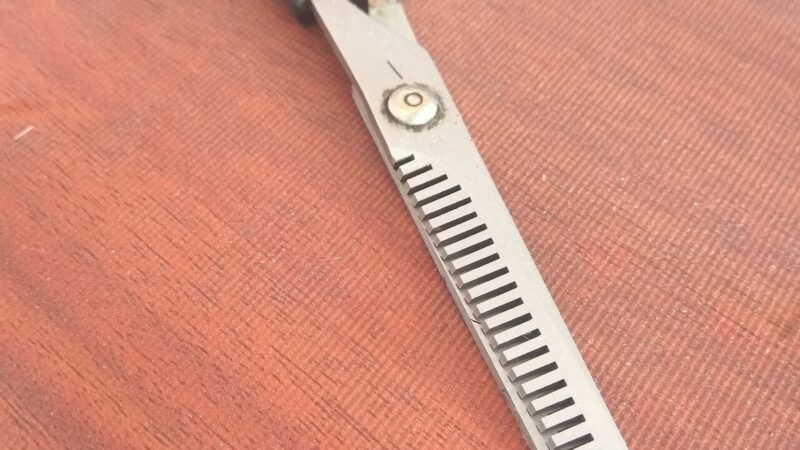
- Budget a cut-in that understands systems; thinning shears in inexperienced hands can permanently damage a unit.
If cleanup or scalp-edge film is actually your fork (not mono durability), switch to lace vs thin skin. For sequencing base with budget and install skill, continue with how to choose a hair system. Return to the men’s hair system shortlist for multi-brand conditional picks.
Image credits: Cover photo: Stock photo: Nenad Stojkovic / Wikimedia Commons, CC BY 2.0 (resized).
Diagrams: self-drawn by Polishwise.
Product images from Lordhair product pages, linked to the source pages.
Product images are merchant images, not photos taken by this site.