“Best thin skin” for men is a conditional shortlist, not a single poly SKU. Thin-skin / polyurethane (poly) bases — including V-loop constructions — are usually chosen for a scalp-like edge and simpler tape/glue cleanup, with public tradeoffs on breathability, shine under hard light, and shorter published wear cycles on ultra-thin films. This Best-of compares Lordhair, LaVivid, and Superhairpieces thin-skin paths with “best when…” branches. For lace vs skin tradeoffs, read lace vs thin skin hair systems; for the multi-base hub, see the men’s hair system shortlist.
Independent Primpwise editorial. Specs and price signals are Public specs (as published; verify on brand site).
How this roundup was built
We compared public thin-skin / skin-system hubs, stock product cards, brand skin-comparison education, and density guides — not private lab wear-tests. Decision gates come from buyer friction that usually changes a thin-skin purchase: shine at the hairline, edge lift, heat trapped under full poly, thickness (mm) vs published lifespan, V-loop vs injected/skin constructions, and whether a beginner should learn on stock poly before custom ultra-thin. Merchant pages supplied thickness and density language; community themes around base choice and adhesive cleanup shaped the branches.
Decision gates for thin-skin buyers
1) Confirm thin skin is the right family
If gym heat, heavy sweat, or lace-front realism dominate, stop and use the lace vs thin skin compare — then the lace Best-of if lace wins. Thin-skin Best-of helps when cleanup simplicity and a film edge are the primary gates.
2) Thickness, V-loop, and published lifespan
Public brand education is consistent: thinner films often look more natural and carry shorter published wear cycles; thicker poly can last longer but shine more. Lordhair’s public beginner-oriented framing around SuperSkin-V (about 0.06 mm, V-loop, medium-light 100% density on the stock listing) is a concrete stock entry to evaluate — still verify mm, density, and returns on the live card (SuperSkin-V).

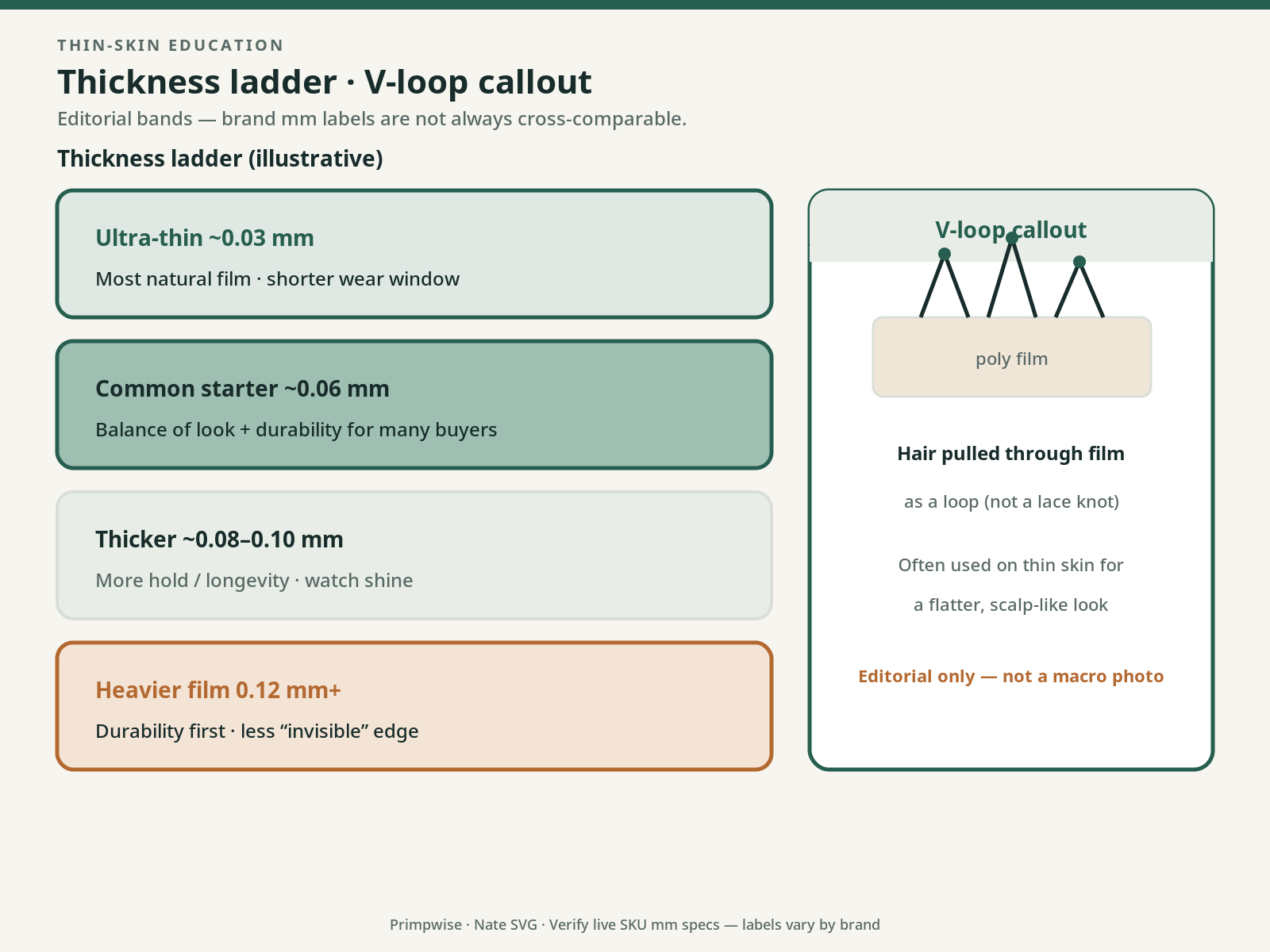
| Thin-skin choice (public framing) | Strong when… | Watch-outs |
|---|---|---|
| Ultra-thin stock / V-loop | Scalp-like look; learning attach on a known stock SKU | Careful handling; shorter published cycles; shine management |
| Slightly thicker poly | Want more durable perimeter for tape cycles | Can read denser or shinier at the edge |
| Custom thin skin | Contour / gradient / color stock cannot meet | Lead time; final-sale risk; poor classroom for first mistakes |
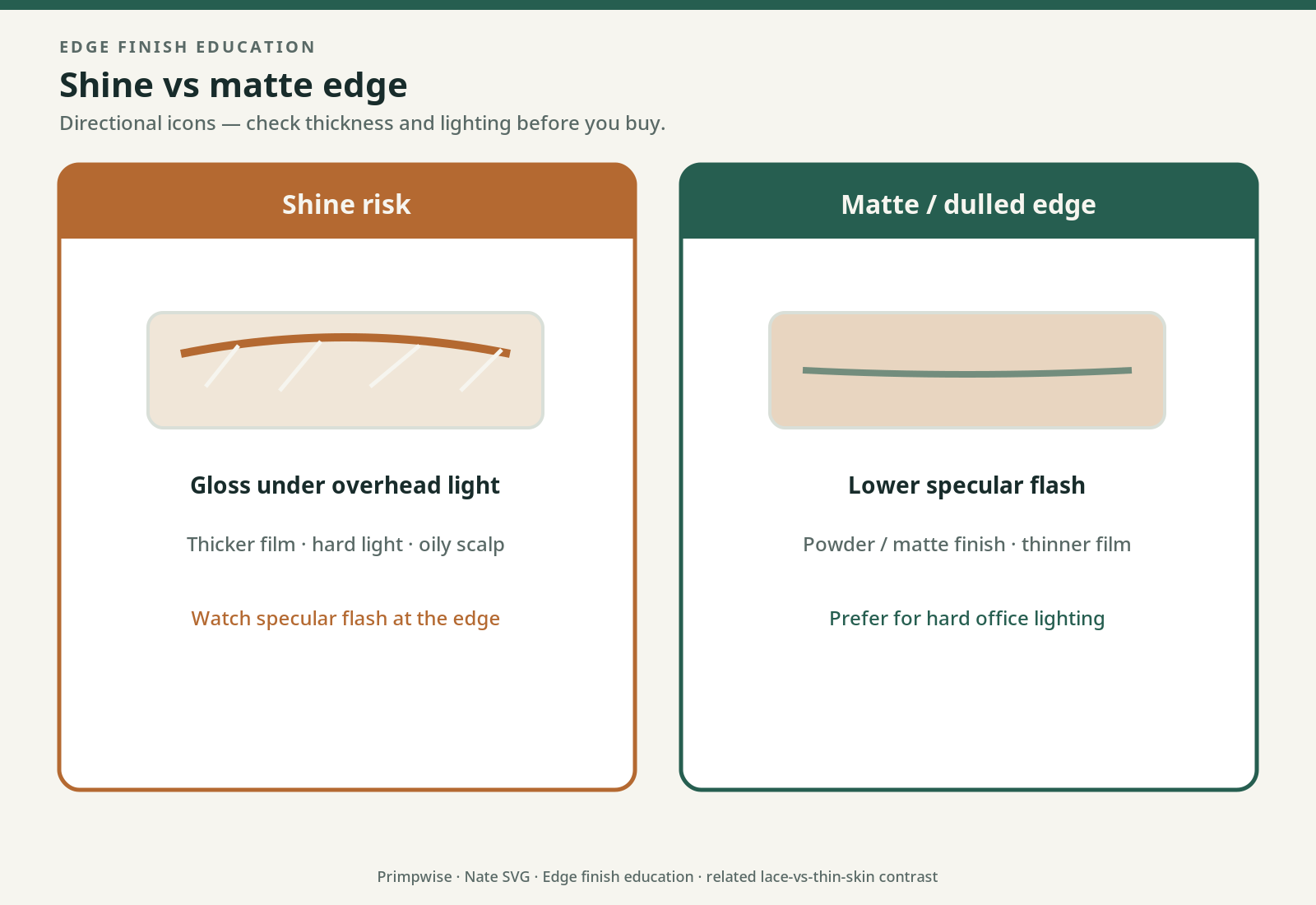
3) Shine, density, and “wiggy” poly
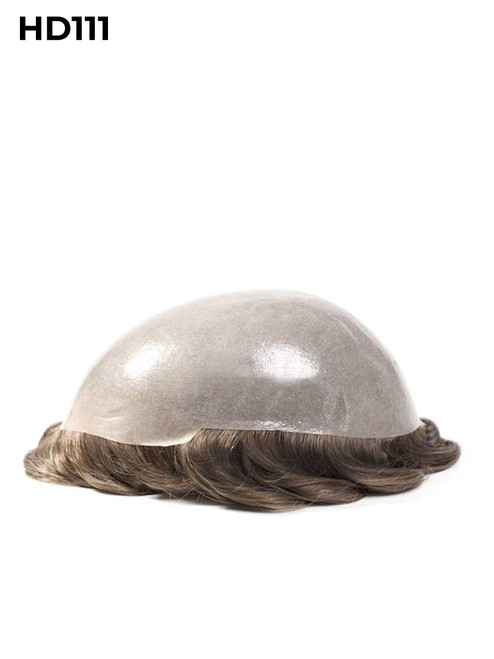
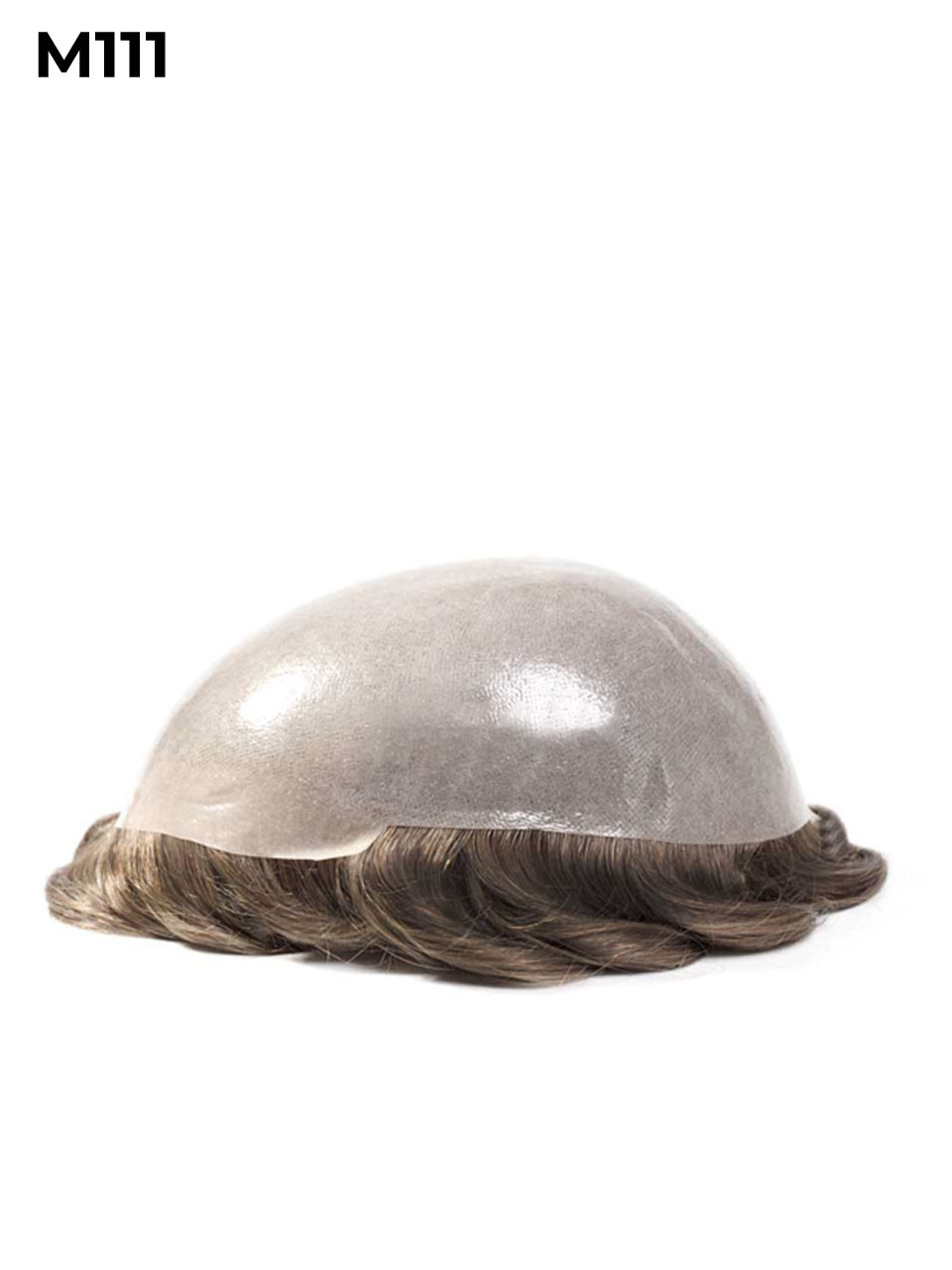
Unnatural-look themes on thin skin often cite poly shine, a thick visible edge, and density too high for bio hair. Superhairpieces’ density guide notes the same percentage often looks lighter on thin skin than on mono (density guide). Editorial bias: start light / light–medium, check the unit in daylight and under indoor hard light, and do not “fix” density with aggressive thinning shears on a first unit.
4) Beginner maintenance vs sport lifestyle
Thin skin is frequently the easier DIY cleanup path; full poly is also frequently hotter in gym climates. If sport is non-negotiable, reconsider lace or lace-front hybrid before locking full-skin. Install skill framing: DIY vs salon; first-order product framing: best hair systems for beginners.
Public specs comparison (thin-skin shortlist)
Public specs (as published; verify on brand site). SHP unit shelf prices = check live listing when unverified.
| Brand | Thin-skin / poly public range | Density / thickness (public) | Best when… | Shop |
|---|---|---|---|---|
| Lordhair | Skin ladder incl. SuperSkin-V stock; related Lite / VM variants on skin education; Afro skin options on Afro hub | SuperSkin-V ~0.06 mm V-loop; stock listed medium-light 100% (verify live) | Wants a clear published thin-skin beginner SKU narrative + thickness ladder | Lordhair SuperSkin-V |
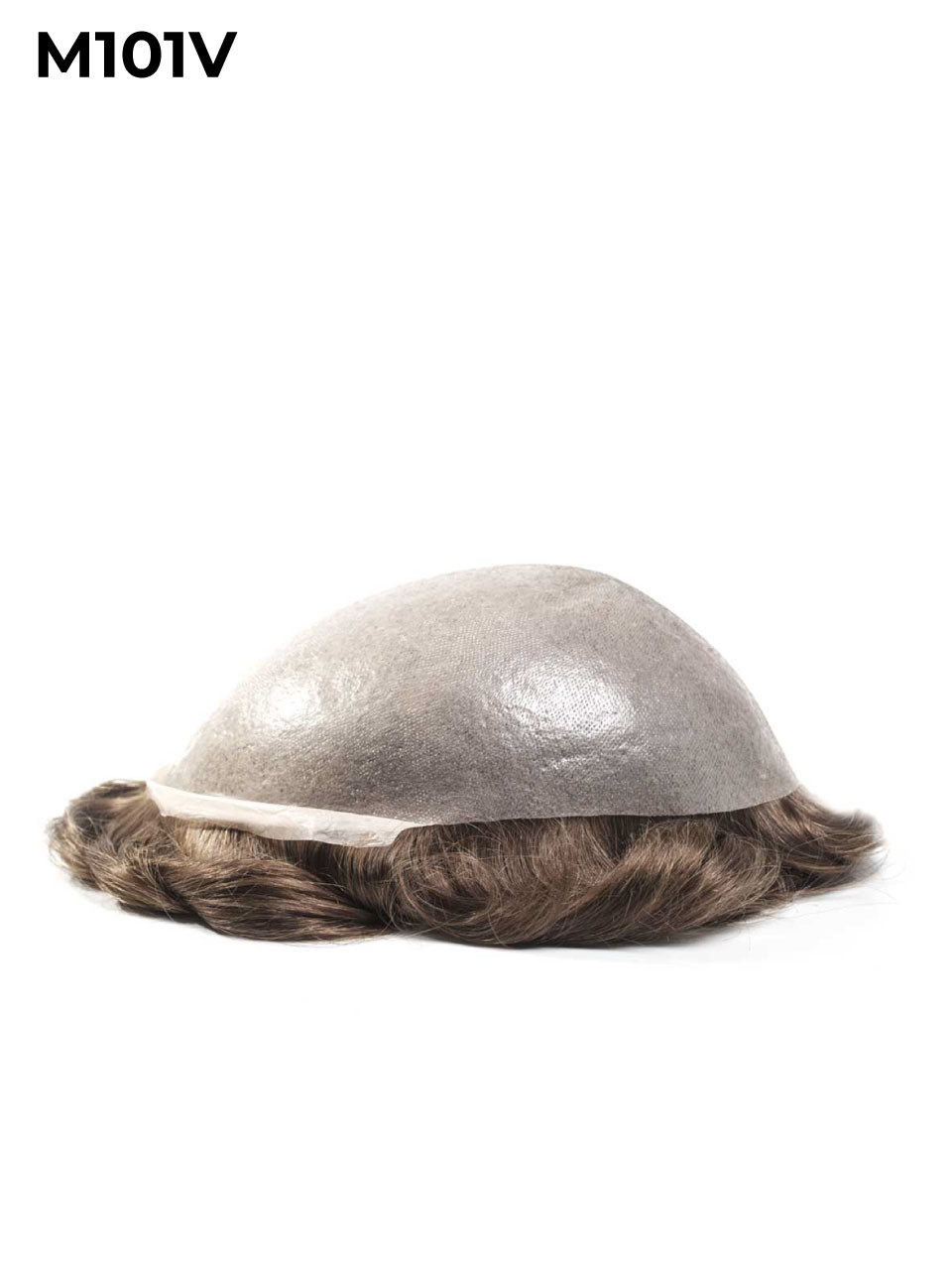
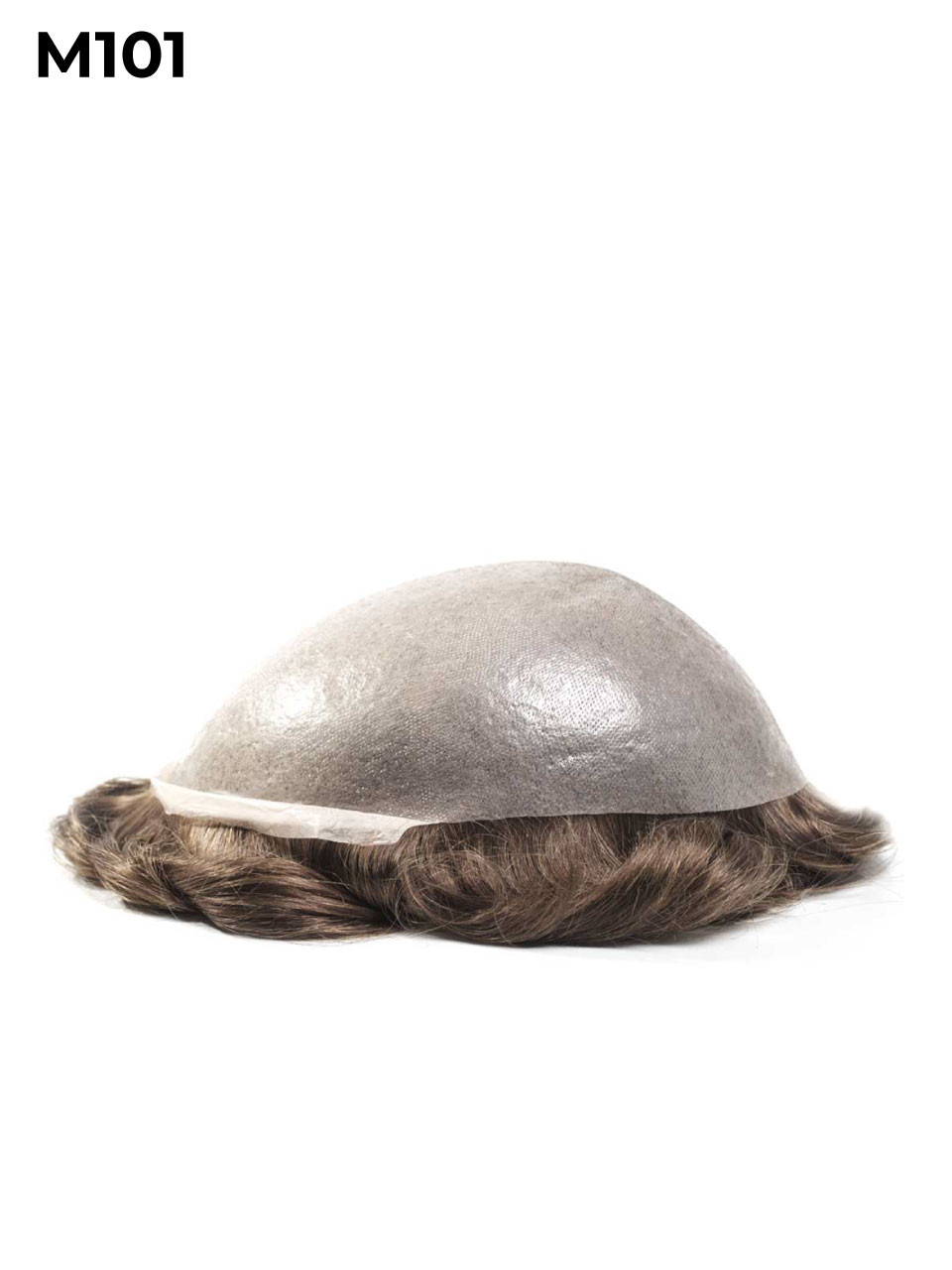
| Superhairpieces | Thin-skin hub; blog bestsellers cite HD111, M111, M101V, M101-class poly models (verify live) | Density guide ~75–120%+ bands; light systems called out for first units | Wants deep stock SKU education before buying poly | SHP thin skin |
| LaVivid | Skin hair systems collection; cost article discusses skin types with published bands | Density as fit variable in cost education | Comparing skin price bands on LaVivid’s cost guide; may need custom skin later | LaVivid thin skin |
| UniWigs (men, optional) | Men’s toupee category — confirm skin/poly SKUs live | Verify live | Already in UniWigs ecosystem with a live men’s skin listing | UniWigs men’s hub |
Price signals (thin-skin-relevant)
| Source | Public signal (verify live) | Link |
|---|---|---|
| Lordhair SuperSkin-V | Listed from about $249 USD on the stock product page (currency switcher present) | SuperSkin-V |
| LaVivid cost article | Skin types roughly $100–$299 as published bands | LaVivid cost article |
| Superhairpieces | Thin-skin bestseller education; unit shelf prices: check live listing | SHP thin-skin bestsellers |
Adhesives, removers, and replacement frequency often dominate TCO on ultra-thin skins — see the cost breakdown.
Conditional recommendations
If beginner + DIY cleanup simplicity → stock thin skin, light density
Prefer a known stock V-loop / poly unit with clear return rules for unworn/uncut pieces. Avoid ultra-thin custom as a first classroom.
Shop: Lordhair SuperSkin-V · Superhairpieces thin skin · LaVivid thin skin
If scalp-like edge under casual viewing → thinner published mm (with shine plan)
Expect matte strategies and daylight checks. Thinner is not automatically “better” if handling skill is low.
Shop: same thin-skin hubs; compare mm language on live cards.
If hold cycles and perimeter toughness matter more than maximum thinness → slightly thicker poly or hybrid perimeter
Some wearers move toward poly where tape sits and lace at the front — see SHP hybrid if a pure skin edge is failing lifestyle needs.
If sport / heat dominates after trying skin → switch to lace family
Do not stay on full poly out of sunk-cost bias. Continue to best lace hair systems for men.
If stock skin cannot meet contour / color / curl → custom skin
Only when stock ladders miss — stock vs custom. Custom: LaVivid custom (verify Lordhair / SHP custom forms live).
Brand notes (horizontal)
Lordhair
Clear public thin-skin ladder with SuperSkin-V as a commonly cited stock beginner narrative, plus Afro skin tiles on the Afro hub. Always re-check thickness and density on the live card you will order.
Superhairpieces
Deep thin-skin education (bestseller listicles, density×base interaction). Useful when comparing named poly SKU families before purchase. Shelf prices from live product pages only.
LaVivid
Skin collection plus published skin price bands on the brand cost article. Treat bands as education; cart prices vary. Custom skin when stock fails.
Shine, edge lift, and adhesive themes
Thin-skin buyer friction often clusters around shine under office LEDs, front edge lift in humidity, and adhesive residue on poly during cleanup (usually easier than lace yank risk, still technique-dependent). Editorial checklist before blaming the brand:
- Density matched to sides/back?
- Edge cleaned and placed without a thick ridge?
- Adhesive type matched to wear cycle and climate?
- Bio oil / sweat prep adequate?
If hold fails after those checks, change adhesive system or thickness — not necessarily the entire merchant.
Stock thin skin vs jumping to custom
First thin-skin orders absorb cutting mistakes, density regret, and adhesive learning. Stock units with published mm and density, plus return rules for unworn/uncut pieces, usually beat custom ultra-thin as a classroom. Custom wins when coverage shape, hairline map, or color/curl ladders clearly exceed stock — not because custom automatically looks more natural. Deep fork: stock vs custom hair systems.
Budget-conscious thin-skin buyers should also read best budget hair systems for men so adhesives and replacement cadence sit in the plan beside the unit sticker. A “cheap” ultra-thin that needs monthly replacement can lose to a slightly thicker stock unit with honest lifespan language.
Color and edge realism on poly
Color-match themes warn that bonded systems can read darker than photo swatches. Match sides and back in daylight; when between shades, bias lighter. On thin skin, a correct color with a shiny thick edge still fails close inspection — edge finishing and lighting checks are part of the product choice, not optional aftercare trivia. Grey-blend codes (#1B10 / #1B20-class mixes where offered) matter when salt-and-pepper bio hair is present; confirm on each brand’s live chart rather than assuming every stock ladder includes the same mixes.
FAQ
What is the best thin skin hair system for men?
No universal SKU. Most beginners evaluate a stock thin-skin / V-loop unit in light / light–medium density from two catalogs, then verify mm, returns, and live price.
Is thinner always more natural?
Thinner often looks more scalp-like and is more fragile, with shorter published cycles in brand education. Natural look still fails first on density, cut, and shine management.
Thin skin or lace for a first system?
If cleanup simplicity wins → thin skin. If breathability / hairline-first wins → lace. Full fork: lace vs thin skin.
How long does thin skin last?
Public framing varies by mm and care; ultra-thin units are often discussed in shorter wear cycles than thicker poly or mono. Verify lifespan language on the listing you buy — do not treat forum anecdotes as a warranty.
How much do thin-skin systems cost?
Public signals include Lordhair SuperSkin-V around $249 and LaVivid published skin bands roughly $100–$299; SHP shelves = live listing. Add adhesives and replacements — cost breakdown.
Related guides
- Lace vs thin skin hair systems — Must material fork
- Best hair systems for men (2026) — Must hub
- Best lace hair systems for men — sibling Best-of
- Best hair systems for beginners · How to choose
- Lordhair vs LaVivid vs Superhairpieces
Closing
- Confirm thin skin fits lifestyle (cleanup vs heat).
- Prefer stock light density while learning.
- Compare mm + density on two live cards — not homepage slogans.
- Plan shine checks and adhesive technique.
- Move to custom only when stock cannot meet the spec.
Shop thin-skin shortlist: Lordhair SuperSkin-V · Superhairpieces thin skin · LaVivid thin skin
Image credits: Cover photo: Stock photo: Crisco 1492 / Wikimedia Commons, CC BY-SA 4.0 (resized); Barber photo: Stock photo: alexandre saraiva carniato / Pexels.
Diagrams: self-drawn by Polishwise.
Product images from Lordhair and Superhairpieces product pages, linked to the source pages.
Product images are merchant images, not photos taken by this site.