“Best budget” for men’s hair systems is not the lowest sticker on a screenshot. Entry value is total cost of ownership (TCO): unit price + adhesives/removers + cut-in + how often the base must be replaced + shipping/duties. This Best-of shortlists conditional stock-first paths from Lordhair, LaVivid, and Superhairpieces using Public specs (as published; verify on brand site) — without crowning a universal cheapest brand. Pair this page with the hair system cost breakdown for TCO layers and stock vs custom for when “cheap custom” is a false bargain. Multi-base context: men’s hair system shortlist.
Independent Primpwise editorial. SHP unit shelves unmarked as verified this pass = check live listing.
How this roundup was built
We compared public stock product price signals and brand cost education articles across shortlisted men’s sellers, then organized recommendations around buyer cost friction: first-unit risk, stock vs custom lead time and final-sale rules, density regret (expensive when it forces early replacement), adhesive burn rate, and salon vs DIY labor. Community cost and beginner themes shaped the gates; merchant pages supplied published bands and stock list signals. No private invoices and no invented shelf prices.
Decision gates for budget buyers
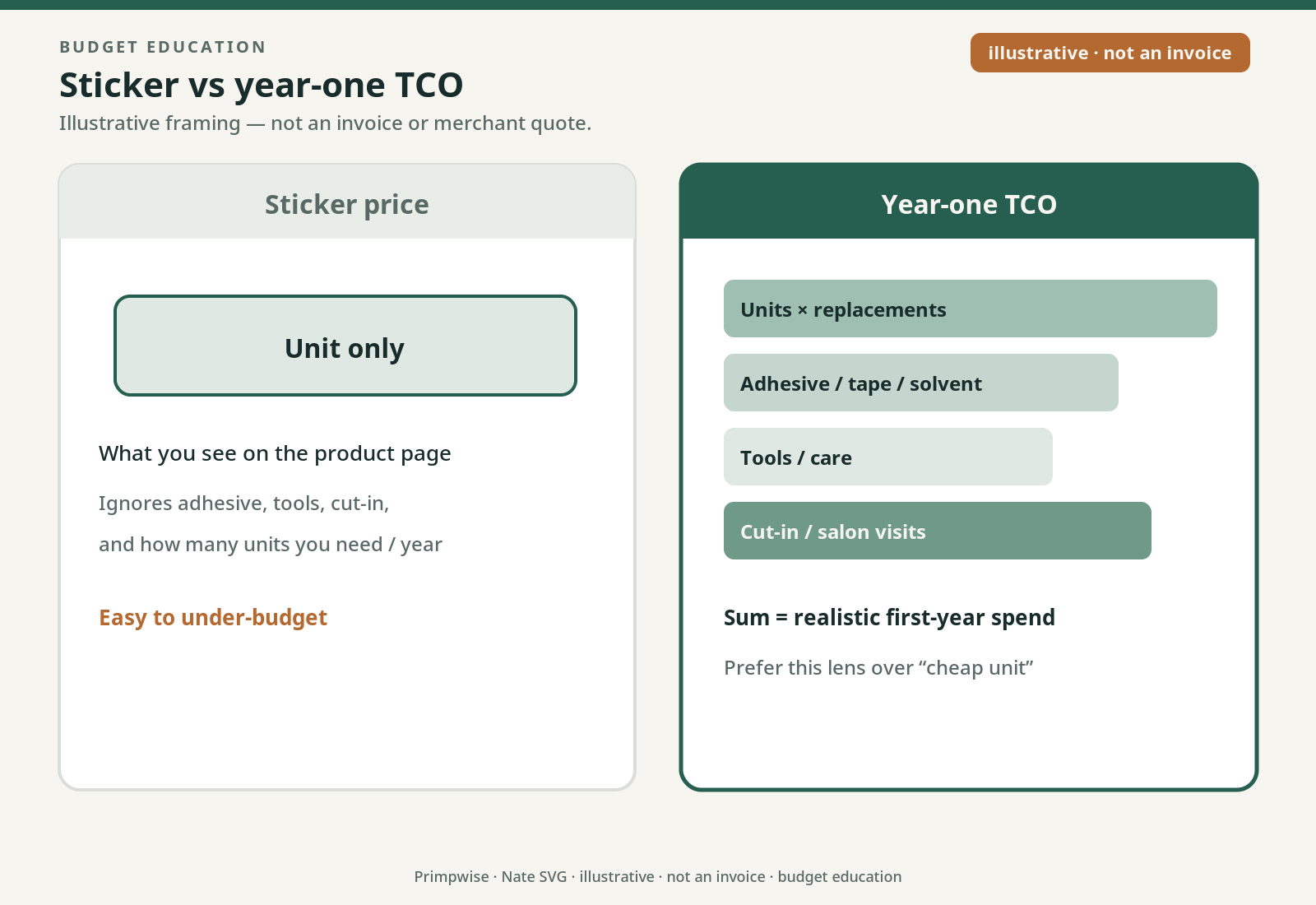
1) Sticker vs year-one TCO
A low unit price with monthly ultra-thin replacement and salon reattaches can cost more than a mid stock unit worn longer with DIY reattach. Budget planning should list:
- Unit (stock preferred while learning)
- Tape/glue + remover + scalp prep
- First cut-in (salon strongly preferred for permanent scissors risk)
- Shipping / duties / backup unit if travel matters
- Expected replacement cadence from listing lifespan language (not forum averages as warranties)
Full layering: cost breakdown.
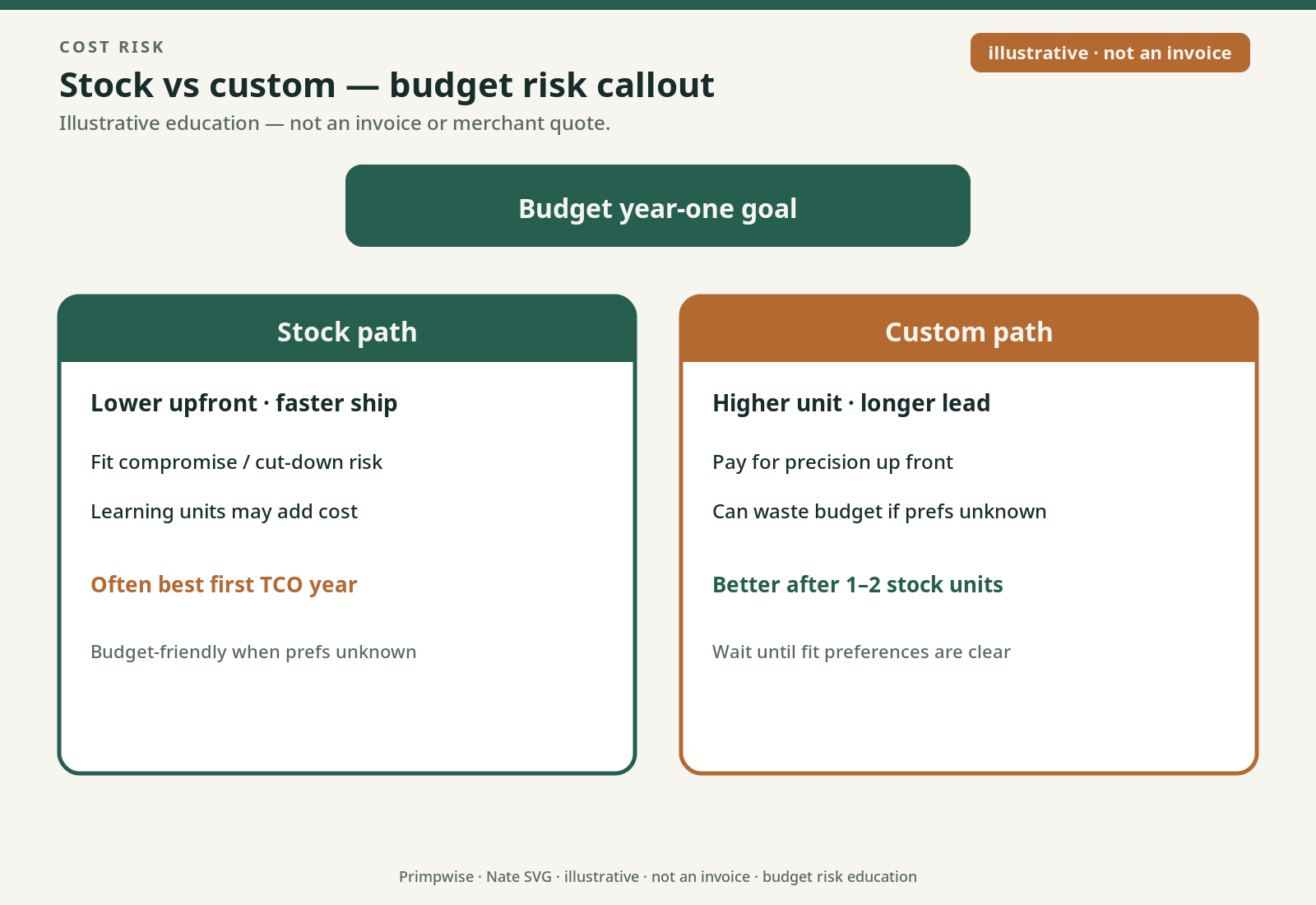
2) Stock first — custom later
Stock wins on speed, lower first-order risk, and (when policies allow) unworn/uncut returns. Custom wins when shape, color, or curl clearly exceed stock — not as a default “premium = better value.” Deep fork: stock vs custom hair systems.
3) Density and cut beat “discount lace”
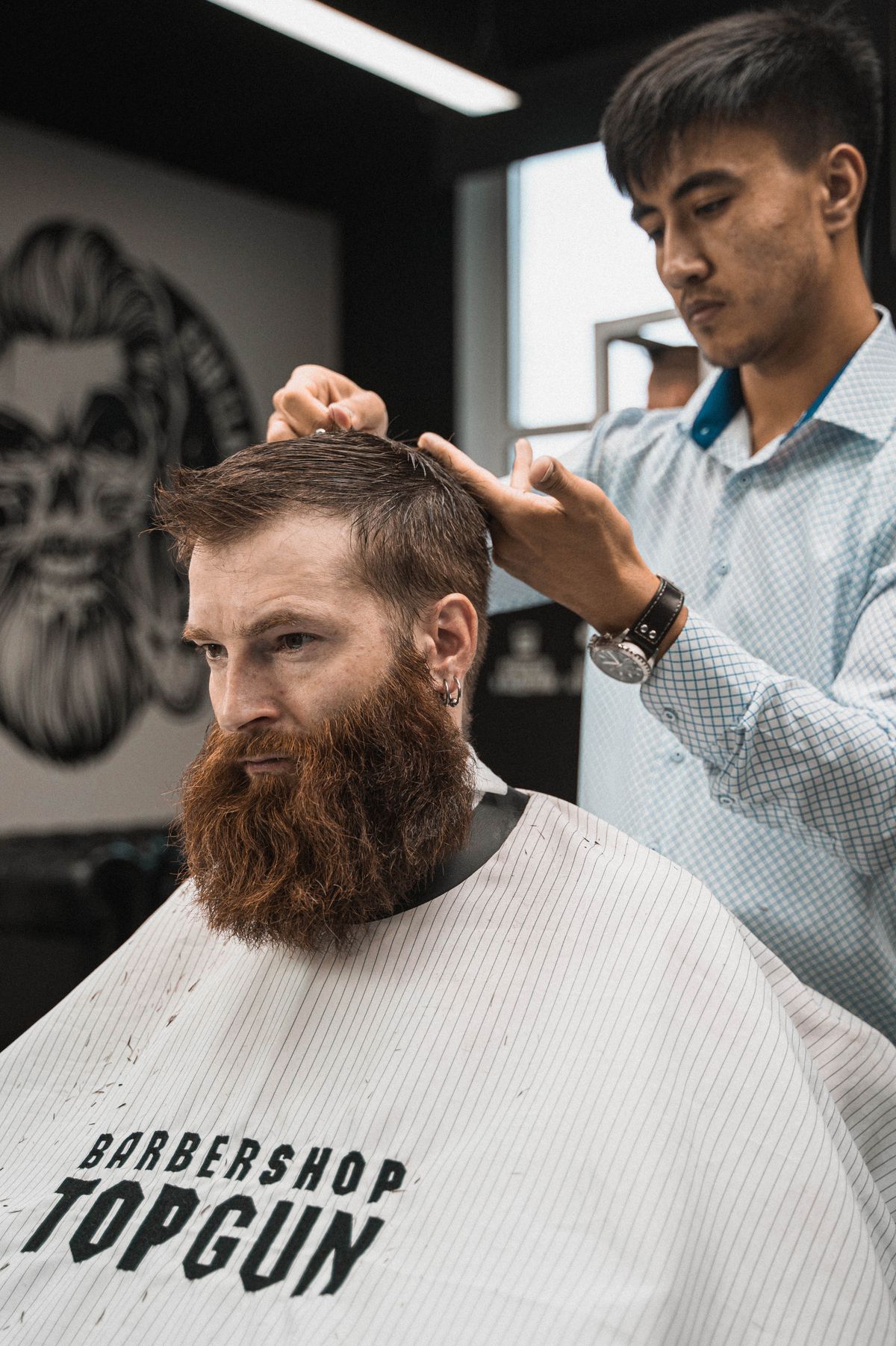
Over-dense cheap units look expensive in the wrong way. Public stylist guidance leans lighter for first units; an unfinished cut wastes any sticker savings. Budget the cut-in before upgrading base fineness.
4) Base choice still has a cost personality
| Base bias on a budget | Why it can save money | Where it costs more |
|---|---|---|
| Stock thin skin | Often easier DIY cleanup; common entry stock SKUs | Ultra-thin = shorter published cycles → more replacements |
| Stock lace / hybrid | Breathability may reduce “quit and repurchase” from heat misery | Lace adhesive learning; tear risk if removed roughly |
| Jump-to-custom | Fits hard specs | Lead time + final sale + expensive classroom for mistakes |
Material deep-dives: lace Best-of · thin-skin Best-of · lace vs thin skin.
Public specs comparison (budget-oriented shortlist)
Public specs (as published; verify on brand site). This table is not a cheapest ranking.
| Brand | Budget-relevant public path | Public price signal | Best when… | Shop |
|---|---|---|---|---|
| Lordhair | Stock SuperSkin-V thin skin as a concrete entry SKU; lace hub for lace-first budgets; Afro hub tiles for texture needs | SuperSkin-V observed from about $249 USD; Afro hub tiles roughly $149–$309 depending on model (verify live) | Wants a published stock thin-skin list price to plan against | SuperSkin-V · Lace |
| Superhairpieces | Thin-skin / lace / hybrid hubs + density education that prevents costly density mistakes | Blog/promo language exists; unit shelf prices: check live listing | Wants education before spending; will verify live shelves | SHP thin skin · SHP lace |
| LaVivid | Stock lace/skin collections; cost article publishes category bands; custom only when needed | Cost article: lace ~$250–$290; skin ~$100–$299; mono ~$190–$350 (bands, not cart promises) | Wants brand-published category bands to sanity-check a cart | LaVivid thin skin · LaVivid lace |
| UniWigs (optional) | Men’s toupee hub — verify live men’s HS stickers | Not verified this pass | Only if a live men’s listing price is confirmed before relying on it | UniWigs men’s hub |
Price sources (Class B)
| Source | Role | Link |
|---|---|---|
| Lordhair SuperSkin-V | Stock list signal ~$249 | Product page |
| Lordhair Afro hub | Example tile range ~$149–$309 | Afro hub |
| LaVivid cost article | Lace/skin/mono bands | Cost article |
| SHP thin-skin bestsellers | Education; shelves live-only | Bestsellers post |
| SHP density guide | Prevents costly over-density | Density guide |
Conditional recommendations
If absolute first system on a tight cash plan → stock thin skin, light density, DIY reattach after salon cut-in
Hybrid labor (pay once for cut-in, self-reattach later) often beats full salon cycles for year-one cash. Product start:
Lordhair SuperSkin-V · SHP thin skin · LaVivid thin skin

Install honesty: DIY vs salon · beginner framing: best hair systems for beginners.
If heat/sport would make full poly miserable → budget lace or lace-front hybrid instead of “cheapest skin”
Quitting from heat and rebuying is not thrift. Lace hubs: Lordhair lace · SHP lace · LaVivid lace
If the only reason for custom is “I want premium” → stay stock
Pay for custom when measurements force it (stock vs custom). Custom CTA when justified: LaVivid custom.
If comparing category bands before opening a cart → use LaVivid’s published education, then verify SKUs elsewhere too
LaVivid cost article is education, not a promise that every cart lands at the bottom of a band.
If still deciding system vs surgery on cost alone → pause
Different problems and timelines — hair system vs hair transplant. Medical advice belongs with a clinician.
What budget buyers should not do
- Crown a brand “cheapest” from a blog promo threshold or a single screenshot.
- Order 120%+ density to “get more hair for the money.”
- Skip return-window reading before a cut-in.
- Use thinning shears as a density plan without skill.
- Treat SHP unverified shelves as filed prices.
- Soft-sell one factory’s promotional band as market truth.
Brand notes (horizontal)
Lordhair
Useful public stock list signal (SuperSkin-V ~$249 observed) and Afro tile ranges for texture-specific budgeting. Re-check live currency and promos.
Superhairpieces
Education-heavy path that can save money by preventing density and SKU mismatches; confirm shelves live before claiming a deal.
LaVivid
Published lace/skin/mono bands help sanity-check expectations; stock collections for entry orders; custom when stock fails — not as a default budget move.
Adhesives and maintenance burn rate
Buyer cost themes repeatedly underestimate consumables. Tape rolls, liquid adhesives, solvents, scalp protectors, and sulfate-aware shampoo add monthly burn even when the unit was “on sale.” Editorial bias for tight budgets:
- Buy a small adhesive starter set matched to the chosen base (poly cleanup vs lace-safe solvent practice) before bulk-buying specialty products.
- Track cost per wear week, not cost per box.
- Avoid “kitchen chemistry” substitutes that damage the base and force early replacement — a ruined unit erases sticker savings.
If maintenance confusion is the main fear, pair this Best-of with beginner maintenance honesty on best hair systems for beginners and install-channel cost on DIY vs salon.
Shipping, duties, backups, and regional access
Landed cost includes shipping speed, duties, and whether a second unit is needed for travel or swim weeks. A slightly higher stock price from a seller that ships predictably to the reader’s region can beat a headline-low unit that sits in customs. Before checkout:
- Confirm shipping region and estimated duties on the live checkout path.
- Read whether adhesives ship in the same order (or need a local beauty-supply plan).
- Decide if a backup stock unit is part of year-one budget or a later upgrade.
Vendor shortlists for consistency and access also appear on the 2026 men’s shortlist and the three-brand matrix Lordhair vs LaVivid vs Superhairpieces.
Entry checklist (cash + specs)
- [ ] Year-one line items drafted (unit, adhesives, cut-in, shipping, replacement reserve)
- [ ] Stock vs custom decided with return/final-sale rules read
- [ ] Density chosen light / light–medium unless bio hair clearly supports more
- [ ] Base chosen for lifestyle (not only lowest tile)
- [ ] Two live carts compared — not one screenshot
- [ ] Unworn/uncut return window verified before scheduling a cut
FAQ
What is the cheapest men’s hair system?
This guide does not name one. Live stock stickers move with promos, currency, and options. Compare two live cards plus adhesives and replacement cadence.
Is stock always cheaper than custom?
Usually on unit price and mistake risk; custom can be cheaper long-term only when stock truly cannot fit — not when custom is bought for status.
How much should a first-year budget be?
Unit in the low hundreds USD is a common public stock signal, but adhesives, cut-ins, and replacements can rival the unit. Build a line-item plan with the cost breakdown.
Should beginners buy the thinnest base to save on “looking cheap”?
No. Ultra-thin can raise replacement frequency. Match base to skill and lifestyle; see beginners Best-of.
Do budget systems look unnatural?
Usually from density, cut, shine, or color — not from “budget brand” as a category. Fix specs before upgrading merchants blindly.
Related guides
- Stock vs custom hair systems — Must
- Hair system cost breakdown — Must
- Best hair systems for men (2026) — Must hub
- Best hair systems for beginners · How to choose
- Lace · Thin skin Best-ofs
Closing
- Budget TCO, not only the unit sticker.
- Prefer stock + light density while learning.
- Shortlist two merchants; verify live price, returns, lifespan language.
- Pay for a competent first cut-in when possible.
- Escalate to custom only when stock cannot meet the spec.
Shop budget-oriented shortlist: Lordhair SuperSkin-V · SHP thin skin · LaVivid thin skin · LaVivid lace
Image credits: Cover photo: Stock photo: Joe Mabel / Wikimedia Commons, CC BY-SA 3.0 (cropped and resized); Barber photo: Stock photo: Alex Urezkov / Pexels.
Diagrams: self-drawn by Polishwise.
Product images from Lordhair product pages, linked to the source pages.
Product images are merchant images, not photos taken by this site.