A DIY (self-install) hair system path means the wearer bonds, cleans, and usually reattaches the unit at home after learning adhesive and base care. A salon / stylist install path means a trained system stylist handles the first cut-in and often ongoing attach cycles. Neither path is universally “better”: salon work front-loads skill and blend quality; DIY front-loads learning time and can lower per-cycle cost once technique is stable. This page compares those install channels so beginners can choose by skill, budget, and access to a qualified stylist — not by fear or hype.
We organized the comparison around public buyer friction themes: finding a system-literate stylist, learning self-install under budget pressure, first-unit risk (cut, density, adhesive), and how base choice (lace vs thin skin) changes DIY difficulty. Product specs cited below remain Public specs (as published; verify on brand site).
Public specs comparison
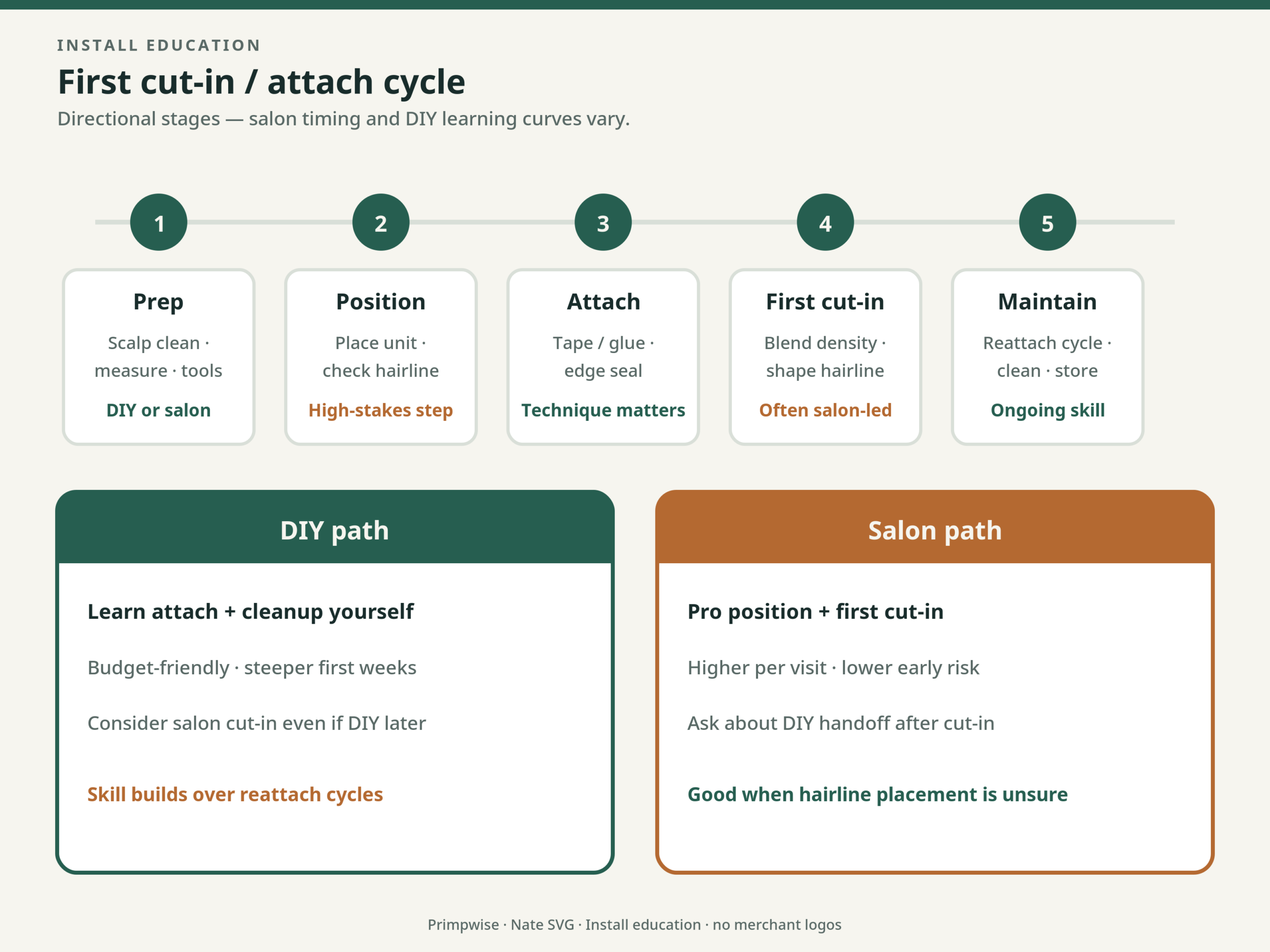
Public specs (as published; verify on brand site). “Cost” cells are directional total-ownership themes, not a priced service menu.
| Dimension | DIY / self-install | Salon / stylist install |
|---|---|---|
| Who does the work | Wearer (after tutorials + practice) | System-experienced stylist / barber |
| First cut-in | High risk if inexperienced; thinning shears can permanently damage a unit | Usually included or booked as a dedicated cut-in |
| Per-cycle cost | Adhesives + time; no salon labor after skills stabilize | Labor + product each visit; higher cash outlay per attach |
| Learning curve | Steep for lace edges and ultra-thin skins; thinner poly often easier to start | Lower for the wearer; quality depends on stylist system experience |
| Access constraint | Works when no local stylist exists | Finding a system-literate salon is a common friction point |
| Best if… | Budget-limited, willing to practice, has a simple stock base | First unit, hard hairline goals, or no appetite for adhesive learning |
| Watch-outs | Bad first cut; adhesive on lace yanking hair; isolation without feedback | Salon that only does fashion wigs; upsell without teaching maintenance |
| Pairs well with | Stock light-density thin skin or forgiving hybrid; clear return rules for unworn units | Any base; still verify the stylist has cut systems, not only bio hair |
Merchant education still matters for the unit even when install channel differs. Lordhair’s public beginner framing around a thin V-loop skin stock unit is one common stock entry narrative for people learning attach/clean (Lordhair SuperSkin-V). Superhairpieces publishes density and thin-skin education that beginners use before either path (SHP density guide; SHP thin-skin bestsellers). LaVivid’s cost article discusses unit bands and service/context costs as published education — useful when estimating year-one spend beyond the piece alone (LaVivid cost article).
For brand-level product shortlists after you pick an install channel, see the men’s hair system shortlist.
If budget is tight and you will practice → DIY (with a careful first unit)

Self-install themes often appear when salon labor is unaffordable or when someone is relocating and cannot find a local system stylist yet. DIY can work, but the expensive mistakes are front-loaded: cutting density too aggressively, bonding lace incorrectly, or ordering an ultra-thin custom before learning cleanup.
Editorial bias for DIY-first:
- Start with a stock unit in light / light–medium density, preferably a base that brand education frames as simpler for cleanup (often thin skin / poly), unless breathability forces lace.
- Keep an uncut spare plan when return windows allow — many first cuts are learning cuts.
- Learn adhesive on the base you actually bought; lace-edge technique does not transfer 1:1 from poly film tutorials.
- Budget tools and solvent/cleaner honestly; “free DIY” is rarely free.
- Cross-check product shortlists against best hair systems for beginners before treating any single stock card as the only starter.
Shop beginner-friendly stock starting points: Lordhair SuperSkin-V · Superhairpieces thin-skin systems · LaVivid skin systems
When you want a curated beginner product list (not only install channel advice), use best hair systems for beginners.
If first-unit blend quality or no DIY appetite → salon / stylist
Salon install is the better default when the first reveal must look finished, when the hairline is the make-or-break feature, or when the wearer will not practice adhesive routines. Community friction around “finding a stylist” is real: not every salon that cuts men’s hair understands systems, lace knots, or poly shine. Ask specifically about hair system / toupee experience, cut-in process, and whether they will teach a maintenance schedule.
Editorial bias for salon-first:
- Pay for a stylist who has cut systems before; fashion-wig experience alone is not the same skill.
- Still choose base and density deliberately before the appointment — a salon cannot rescue a badly mismatched order. If base and density are still open, walk how to choose a hair system before the booking.
- Ask whether ongoing attaches are available locally; a one-time cut-in with no maintenance path pushes you toward DIY later anyway.
- Bring reference photos of density and hairline goals; “make it natural” is not a specification.
Shop units to take to a stylist (match base to goal): lace collections — Lordhair lace · Superhairpieces lace · LaVivid lace — or thin-skin collections linked in the DIY branch if cleanup simplicity is the joint goal with the stylist.
Hybrid path: salon first cut-in, DIY maintenance
Many wearers combine channels: professional cut-in and blend once, then self-reattach on a schedule. That hybrid reduces the highest-risk step (the first cut) while containing long-term labor cost. It still requires learning cleanup for your base. If travel or relocation is the issue, book the cut-in where expertise exists, then maintain DIY until a local stylist is found.
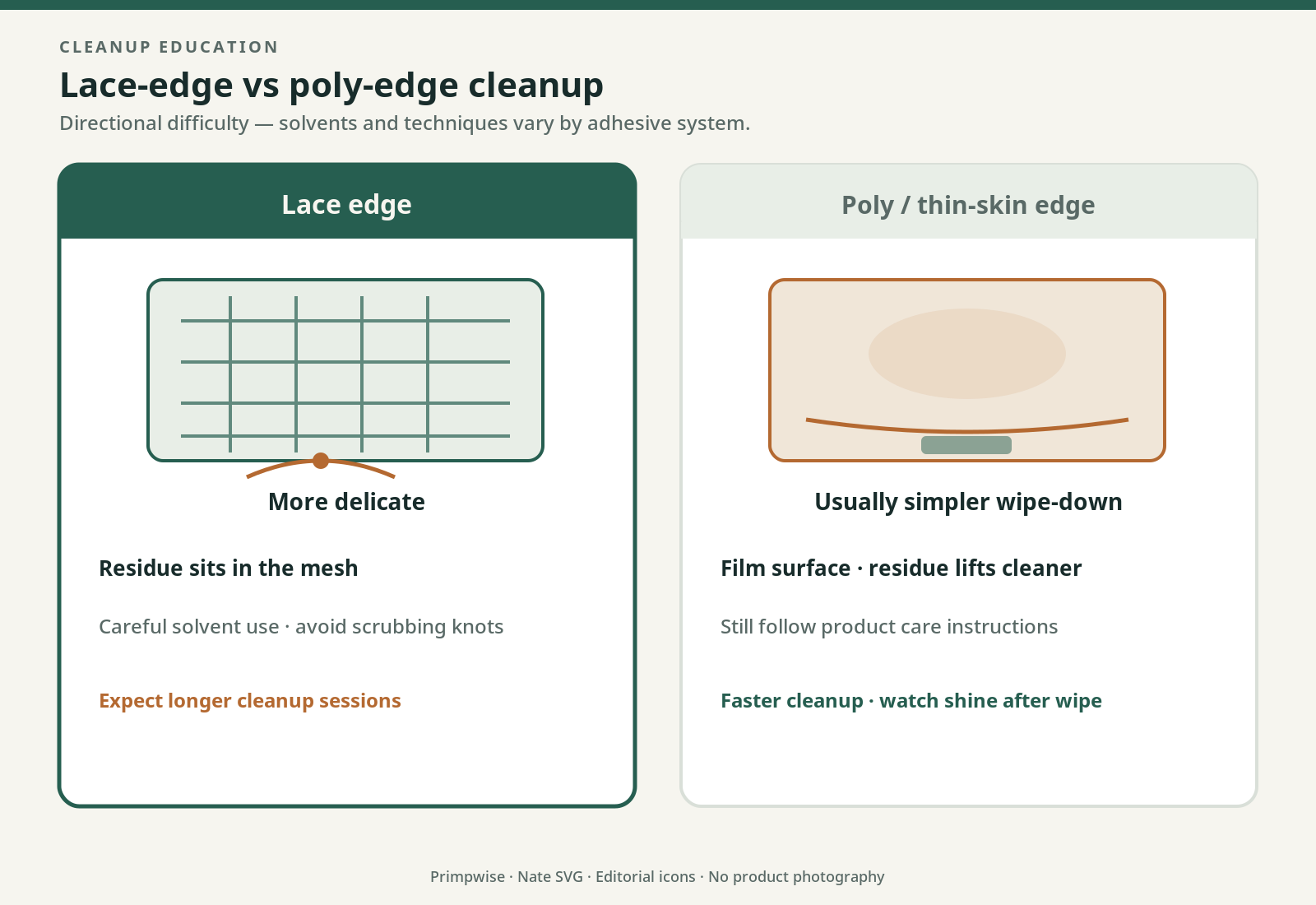
Base choice still changes DIY difficulty
Install channel does not replace base choice. Thin skin / poly is often easier for first self-reattaches because tape cleanup is simpler on film edges. Lace rewards breathability and hairline realism but punishes rough adhesive removal. If you know you will be fully DIY within weeks, bias the first order toward a base you can actually maintain — then graduate to lace when technique is stable. If every attach will be salon-only, optimize for look and lifestyle instead of cleanup simplicity.
Stock vs custom timing also interacts with install channel — a long custom lead time plus no local salon can leave you without a workable plan. See stock vs custom hair systems when lead time is part of the decision.
Maintenance, tape/glue, and replacement cycles often dominate year-one cost as much as the unit or the salon visit. Budget those alongside either path rather than comparing only the sticker price of the system.
For sequencing base, density, budget, and install skill together, use how to choose a hair system.
FAQ
Can a beginner self-install on day one?
Some do, especially on simpler thin-skin stock units, but the first cut-in is where permanent mistakes happen. If possible, get the first cut professionally even if later attaches are DIY. If no stylist is available, go slower: practice placement on an inexpensive stock unit, avoid aggressive thinning, and follow base-specific adhesive guidance.
Is salon always more natural-looking?
A system-literate stylist usually produces a better first blend than a first-time DIY cut. A salon without system experience can still produce an unnatural result. Interview for system-specific experience, not only general barbering.
Does lace force a salon install?
Lace does not require a salon, but lace edges are less forgiving for DIY adhesive mistakes than many poly edges. If choosing lace + full DIY, budget extra practice time and expect a steeper cleanup curve.
How do I find a hair system stylist?
Search for stylists who explicitly mention hair systems, toupees, or men’s units; ask what bases they work with; request before/after examples; and confirm they will cut a client-supplied unit if you buy direct. Regional availability varies widely — that access gap is a common reason people learn DIY.
Should I buy the unit before booking the salon?
Often yes, if the salon accepts client-supplied systems and you have already locked base, density, and color. Some salons only install units they sell — clarify before ordering. Either way, verify return rules for unworn/uncut pieces.
Closing — pick the channel that matches your risk budget
- Decide whether the first cut-in must be professional.
- Decide whether ongoing attaches will be DIY, salon, or hybrid.
- Choose a base that matches that plan (forgiving stock thin skin for DIY learning; lace when hairline/breathability dominate and skill is available).
- Shortlist products from the beginner shortlist or the men’s hair system shortlist.
- Confirm live listing specs, returns, and — for salon paths — stylist system experience.
If lead time or fit is the real constraint (not only install channel), pair this with stock vs custom hair systems. Continue with how to choose a hair system for the full decision tree.
Image credits: Cover photo: Stock photo: Greg Willis / Wikimedia Commons, CC BY-SA 2.0 (resized).
Diagrams: self-drawn by Polishwise.
Product images from Lordhair and Superhairpieces product pages, linked to the source pages.
Product images are merchant images, not photos taken by this site.