A stock men’s hair system is a ready-made (or ready-to-ship) unit in published base sizes, densities, and colors that you may cut down to fit. A custom men’s hair system is built to order from measurements, templates, or detailed specs — usually with longer lead time and stricter final-sale rules. Stock wins when speed, learning, and lower first-order risk matter; custom wins when fit, hairline shape, or texture specs cannot be met off the shelf. This page compares those paths without crowning a single brand “custom king.”
We compared public merchant product and cost education plus common buyer decision themes: lead time, cutting a stock base to fit vs shaving to a stock size, color/density matching, and when full-cap or unusual shapes push people toward custom. Specs and price bands below are Public specs (as published; verify on brand site).
Public specs comparison
Public specs (as published; verify on brand site).
| Dimension | Stock / ready-made | Custom / made-to-measure |
|---|---|---|
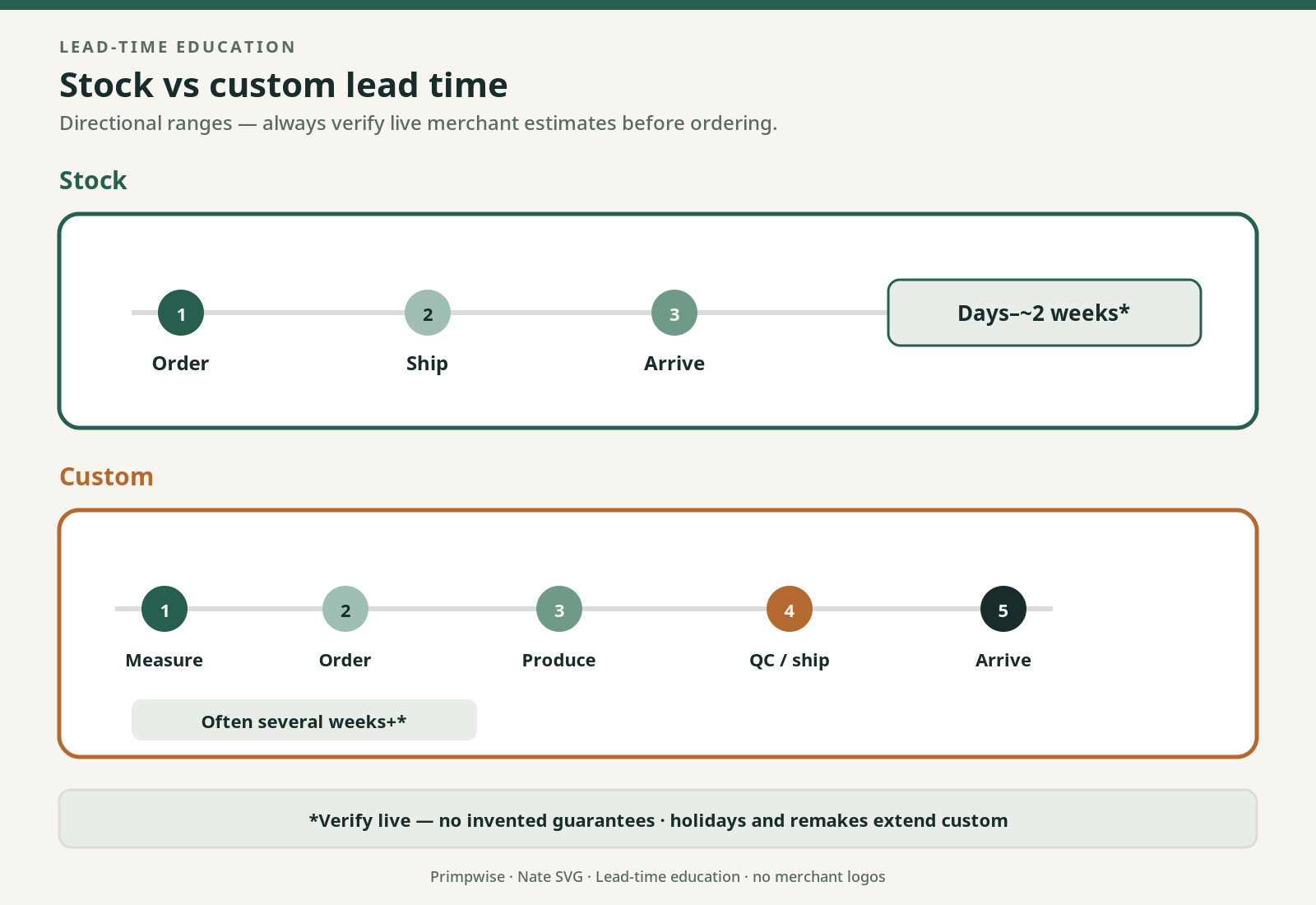
| Lead time | Often days to a couple of weeks (verify live) | Frequently weeks to months on public buyer reports and brand custom pages |
| Fit strategy | Cut base to head or adjust shave pattern to stock size | Built to template / measurements |
| Spec control | Choose from published ladders (base mm, density %, color, curl) | Broader control — still limited by what the factory offers |
| First-order risk | Lower if returns allow unworn/uncut returns | Higher: many customs are final sale once production starts |
| Cost signal | Public stock listings often land in the low hundreds USD for the unit alone | Usually higher unit price + less room to “learn on” the piece |
| Best if… | First system, DIY learning, testing density/color, need speed | Unusual shape, hard color match, specific perimeter map, full-cap nuance |
| Watch-outs | Wrong stock size; over-cutting; assuming all stock is beginner-safe | Long wait; measurement errors; paying custom prices for specs stock already offers |
| Shop starting points | Lordhair SuperSkin-V stock · SHP thin-skin hub · LaVivid skin / LaVivid lace | LaVivid custom · brand custom forms on Lordhair / SHP (verify live custom pages + lead times) |
Public price education remains directional. Lordhair’s SuperSkin-V stock listing has been observed around $249 USD as a public list signal (currency switcher present — verify live) (SuperSkin-V). LaVivid’s cost article publishes lace / skin / mono bands and discusses custom options as part of the public story (LaVivid cost article). Superhairpieces’ thin-skin education emphasizes models and features; treat shelf prices as live-listing only (SHP thin-skin bestsellers). When picking a stock density band before you even open custom, Superhairpieces’ stylist density guide is the public vocabulary surface (SHP density guide).
For multi-brand context, see the men’s hair system shortlist.
If you are learning, testing density/color, or need speed → stock

Stock is the usual first purchase when the goal is to learn attach, cleanup, and blend without waiting months. Buyer themes around stock vs custom often include cutting a prefab base to fit versus shaving more scalp to match a stock size — both are valid tactics, and both have maintenance consequences. Stock also lets you test whether light density actually blends before paying custom prices for the wrong percentage.
Editorial bias for stock-first:
- Prefer published light / light–medium density for first units unless bio hair clearly needs more.
- Read return rules for unworn and uncut pieces before you touch scissors.
- Use stock to decide lace vs thin skin and density bands; then consider custom only for remaining gaps.
- Do not assume “stock” means low quality — many flagship thin-skin and lace SKUs are stock lines with clear public specs.
- If cash outlay is the binding constraint after choosing stock, filter with best budget hair systems for men before opening a custom quote.
Shop stock paths: Lordhair SuperSkin-V · Lordhair lace systems · Superhairpieces thin skin · Superhairpieces lace · LaVivid thin skin · LaVivid lace
If budget is the primary filter after choosing stock, continue with best budget hair systems for men. If you are brand-new to systems overall, pair this with best hair systems for beginners.
If fit, shape, or texture specs exceed stock ladders → custom
Custom is justified when stock sizes will not cover the pattern, when a full-cap or unusual perimeter is required, when color/grey blend needs factory matching beyond ring samples you can order in stock, or when a specific base map (for example mono top + lace front + poly edge) is not sold ready-made. Public buyer themes also stress the wait: custom production can take a long time relative to stock shipping — plan adhesives and interim hair strategy accordingly.
Editorial bias for custom:
- Measure twice (or use a professional template) — a custom unit built wrong is an expensive lesson.
- Do not custom-order specs you have never validated on a cheaper stock unit when stock can approximate them.
- Read final-sale, remake, and deposit rules on the brand custom page before paying.
- Custom is not automatically more natural; density, cut, and color still dominate the result.
- If you are still learning systems overall, prefer the best hair systems for beginners stock path before a first custom deposit.
Shop custom path (partnered example): LaVivid custom toupee page. For Lordhair and Superhairpieces custom forms, open the brand site custom / contact flow and verify lead time and remake policy live — do not invent a deep link that is not on the go-map.
Stock cut-down vs custom: a practical middle
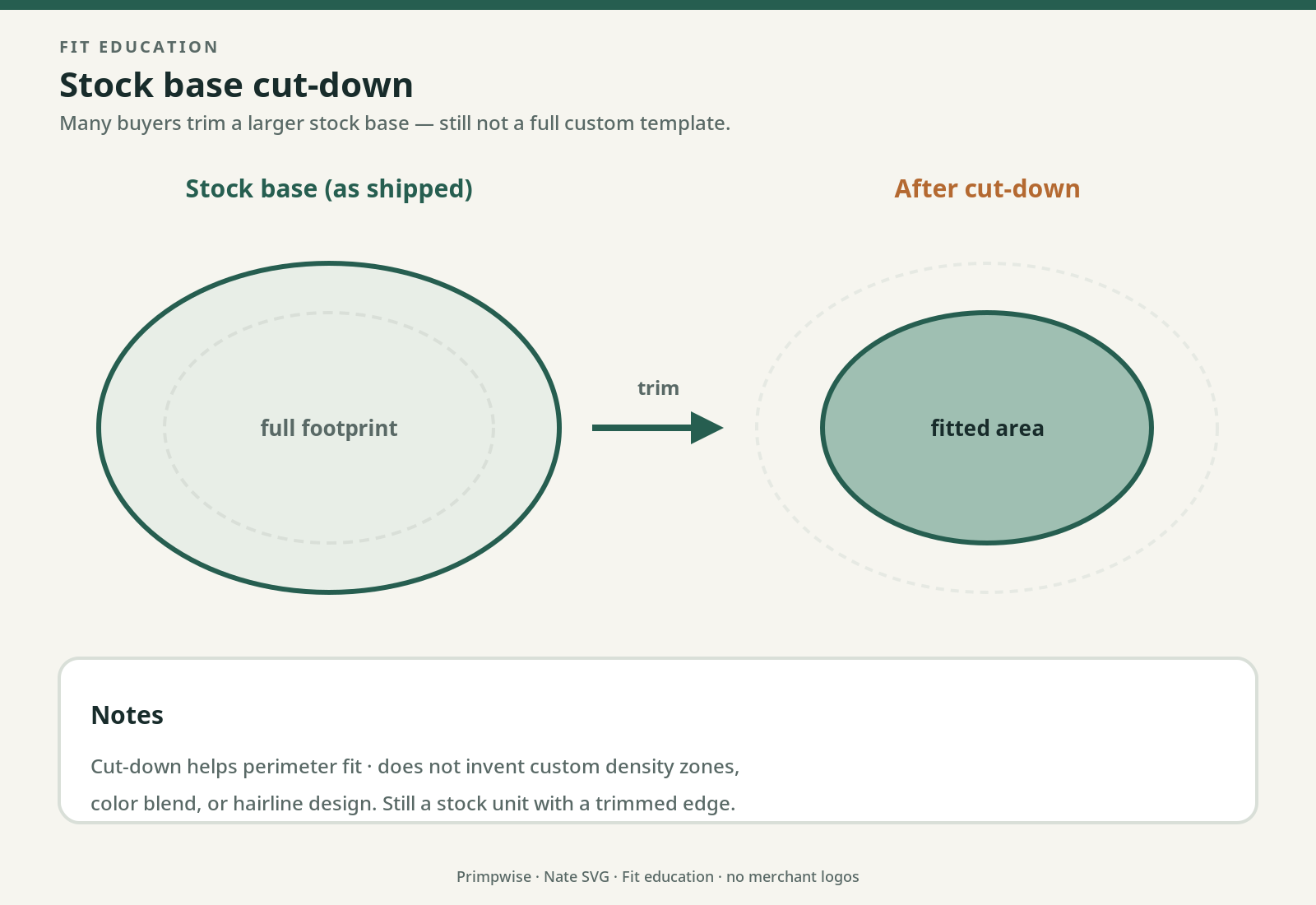
Many “custom-looking” results start as stock units cut to size by a system stylist. That middle path keeps lead time short while improving fit. It fails when the stock base is simply too small, the wrong curvature, or the wrong fiber/curl family. If you are deciding DIY vs salon for that cut-down step, see DIY vs salon hair system install.
What stock already publishes (so you do not over-buy custom)
Before paying custom premiums, check whether stock ladders already publish the thickness, density band, color, and curl you need. Lordhair’s public skin ladder and lace collections, Superhairpieces’ thin-skin / lace / hybrid hubs, and LaVivid’s lace and skin collections cover many common men’s specs as ready-made lines. Custom should answer a gap, not a vague desire for “better.” If the only gap is cut and blend, that is usually a stylist problem, not a factory problem.
Maintenance and adhesives still apply on both paths. A custom unit that is cleaned aggressively or worn past published thin-skin cycles will not outlast a carefully maintained stock unit of similar thickness.
For the full decision tree across base, density, budget, and install channel, use how to choose a hair system.
FAQ
Is custom always better than stock?
No. Custom is better when you need specs stock cannot provide. Stock is usually better for first systems, speed, and learning. A well-cut stock unit often looks better than a poorly specified custom.
How long does a custom hair system take?
Public buyer reports and brand custom pages commonly describe waits of weeks to months depending on factory load and complexity. Always use the live custom page’s stated lead time — do not plan travel or events on an assumed two-week turnaround.
Can I return a custom unit?
Often not once production starts. Stock units more often allow returns when unworn and uncut — still verify the specific policy. Never cut a unit until return eligibility is clear if you might send it back.
Should beginners ever order custom first?
Only when stock truly cannot cover a required shape, texture, or medical pattern — and preferably with professional measurement help. Otherwise, learn on stock, then graduate to custom for the second or third unit.
Does stock vs custom change lace vs thin skin?
Independently. You can buy stock lace, stock thin skin, custom lace, or custom thin skin. Decide base family for lifestyle, then decide stock vs custom for fit and lead time.
Closing — buy the simplest unit that meets the real constraint
- List the constraints that stock cannot meet (size, shape, curl, grey, perimeter map).
- If the list is empty, start stock — light density, clear returns, verify live specs.
- If the list is real, use custom with careful measurements and lead-time planning.
- Pair the order with an install plan (DIY, salon, or hybrid).
- Re-check price, remake, and lifespan language on the live page before paying.
When base, density, budget, and install channel still need sequencing, continue with how to choose a hair system. Return to the men’s hair system shortlist for brand-level conditional picks.
Image credits: Cover photo: Stock photo: Gaurav Dhwaj Khadka / Wikimedia Commons, CC BY-SA 4.0 (resized).
Diagrams: self-drawn by Polishwise.
Product images from Lordhair product pages, linked to the source pages.
Product images are merchant images, not photos taken by this site.