Yes — a bonded men’s hair system can go in a pool, ocean, or lake. The bond does not usually fail mid-lap. What water does do is dry human hair (chlorine and salt), and, with repeated wetting and drying, shorten adhesive wear cycles. This guide covers prep before swimming, aftercare after each session, how pool vs ocean vs lake differ, and which base families handle water better. Specs below are Public specs (as published; verify on brand site).
For multi-brand product context after base choice is clear, see the men’s hair system shortlist. For the material fork that usually decides swim comfort, start with lace vs thin skin.
Will the system fall off?
Community hold-failure themes rarely describe mid-swim detachment when the bond was fully cured. Modern tape and liquid bonds are designed to survive sweat, rain, and short submersion. A cured perimeter typically holds through a normal swim session.
What repeated water exposure does:
- Chlorine dries and can gradually lighten system hair (same chemistry as bio hair, without scalp oils to buffer).
- Saltwater dehydrates strands and can leave residue near the base.
- Wet–dry cycles accelerate adhesive breakdown — active swimmers often move from a 2–3 week cycle toward 1–2 weeks.
None of those equal “system floats away.” They shorten lifespan and dryness management. That is the real planning problem.
Before you swim: prep protocol
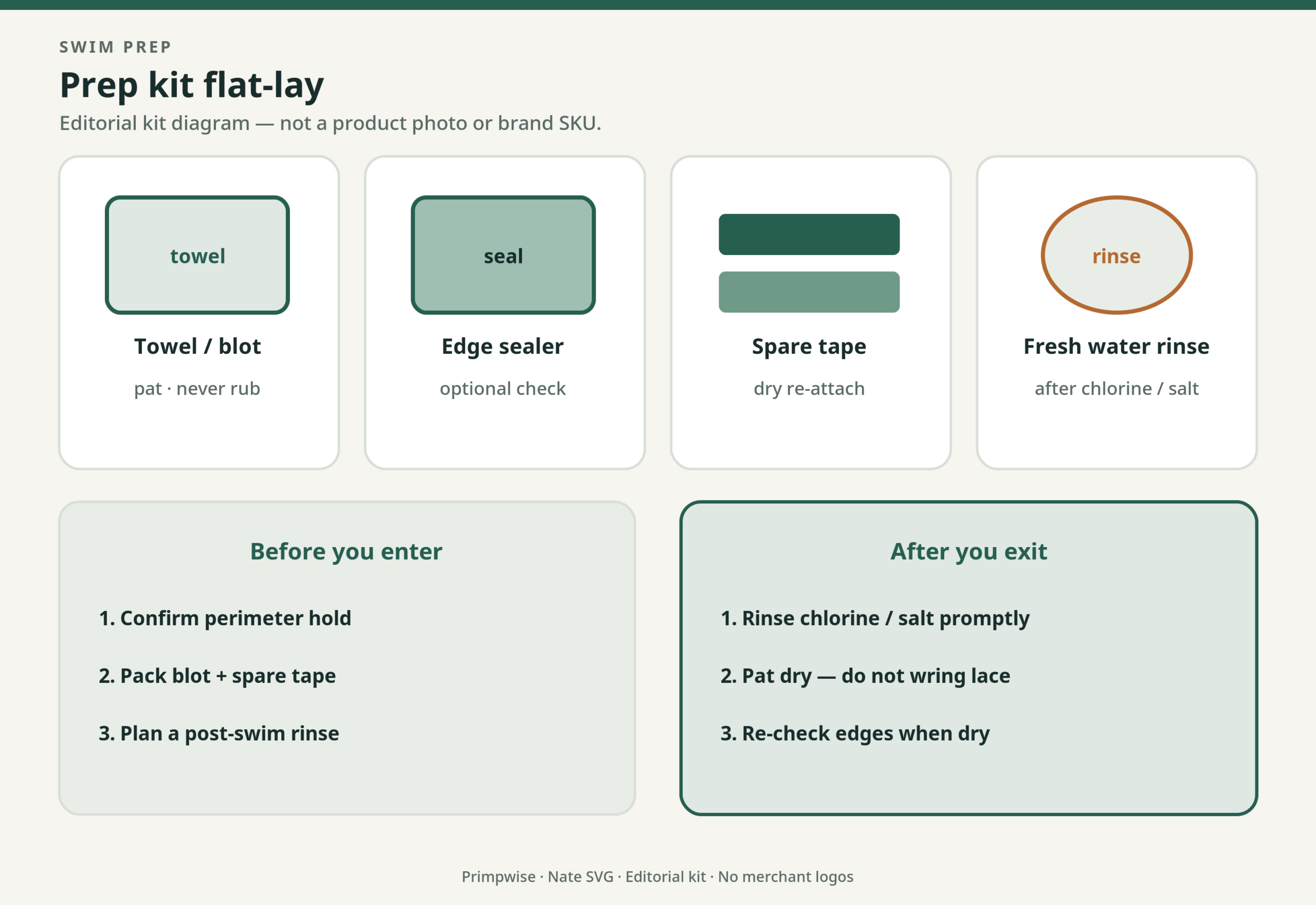
1) Check bond age
If adhesive was applied within the last ~24 hours, wait. Fresh bonds are the most common scenario for real water-related lift. After roughly 48 hours, most public attach guidance treats the bond as closer to full strength — still verify the adhesive brand’s own cure window.
2) Pre-wet with fresh water
Before pool or ocean entry, wet the hair with clean tap water or a quick fresh-water rinse. Water-logged hair absorbs less of the next water it meets — less chlorine or salt uptake into the fiber.
3) Leave-in conditioner on mid-lengths and ends
A light leave-in layer reduces surface drying and matting when wet. Keep product off the base edge so conditioner does not soften the perimeter bond.
4) Optional swim cap for long sessions
Casual dips do not require a cap. Multi-hour lap training benefits from a loose barrier between hair and chlorinated water. Cap pressure is not the goal — coverage is.
After you swim: recovery (about five minutes)
- Rinse immediately with cool fresh water — remove chlorine or salt before it sits. Avoid hot water right after chemical exposure.
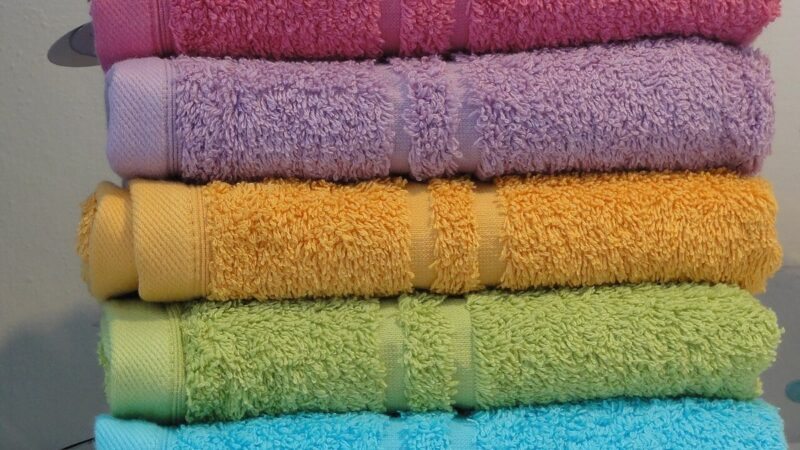
- Pat dry with a microfiber towel — do not rub wet knots at the hairline.
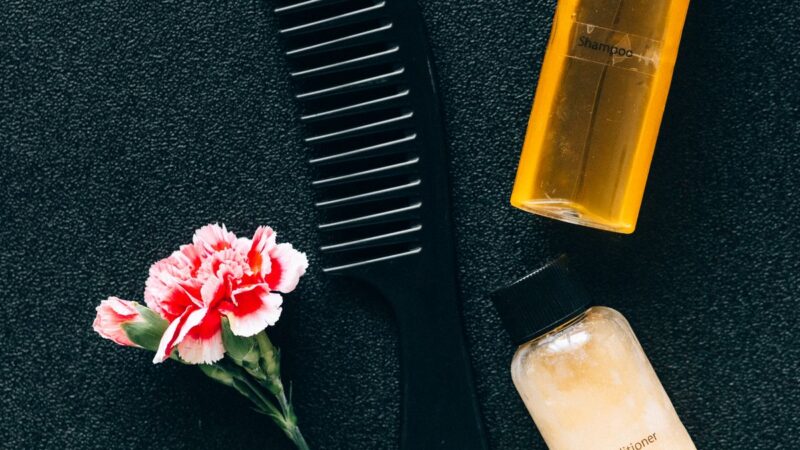
- Detangle from ends upward with a wide-tooth comb.
- Condition mid-lengths and ends (not the bond line).
- Air dry on the head when practical — high heat aimed at the base can stress adhesive and thin films.
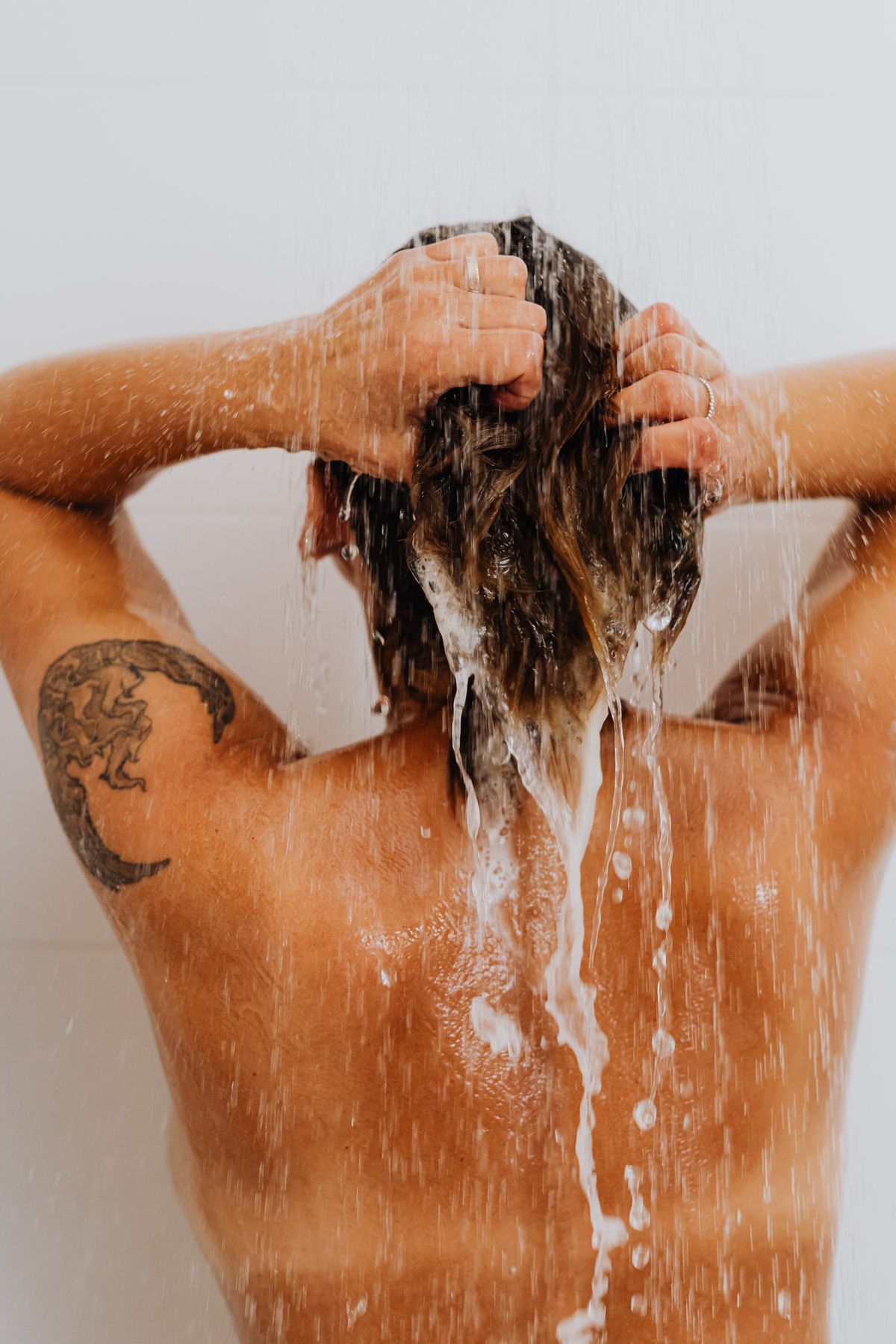
Pool vs ocean vs lake
| Water type | Main risk | Schedule note |
|---|---|---|
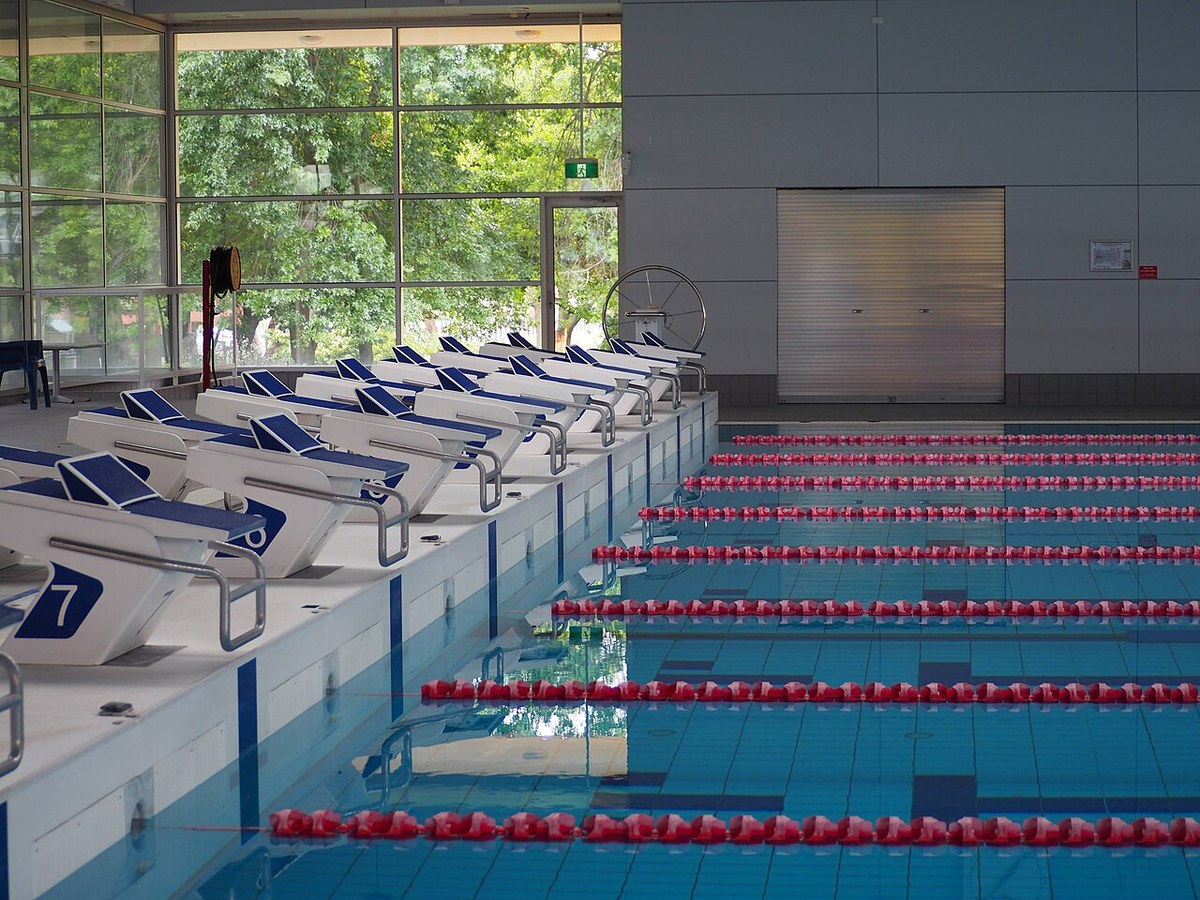
| Pool (chlorinated) | Chemical drying; color fade over time | Rinse immediately; if swimming 3+×/week, plan cleaner cycles every 1–2 weeks |
| Ocean (salt) | Dehydration; residue | Same-day rinse; shampoo within ~24 hours |
| Lake (fresh) | Lowest chemical load | Standard rinse; normal cleaning cadence if sessions are occasional |
Ocean salt is less “bleach-like” than chlorine but still cumulative on dryness. Weekly conditioning mid-lengths helps beach weeks stay manageable.
Best base families for swimming
Public merchant education and wearer themes converge on breathability and drying speed:
| Base (public category) | Swim fit | Watch-outs |
|---|---|---|
| Lace (French / Swiss / lace front) | Strong for regular water — mesh vents and dries faster | Prefer tape on lace mesh; liquid glue wicked into mesh is hard to clean |
| Hybrid (lace + poly perimeter) | Good occasional / mixed lifestyle | Zone care; poly edge still needs rinse discipline |
| Thin skin / poly | Possible; cycles often shorten under frequent wet–dry | Shine; lower breathability; ultra-thin films need gentler handling |
| Mono tops | Occasional swimming OK | Slowest to dry; less ideal as a dedicated swim unit |
Editorial bias for regular swimmers: lace or hybrid over ultra-thin full poly. Decision tree for first orders still lives on how to choose a hair system. Active-day sibling: hair systems for gym workouts.
If lace / water-heavy weeks: Lordhair lace · Superhairpieces lace · LaVivid lace
If thin skin / simpler cleanup and only occasional swimming: Lordhair SuperSkin-V · Superhairpieces thin skin · LaVivid thin skin

Lordhair’s public skin-vs-lace framing around breathability and maintenance tradeoffs matters after pool weeks (SuperSkin-V listing). Superhairpieces lace and thin-skin hubs are useful category starting points before SKU pick (SHP lace hub).
Dedicated “swim unit”?
If swimming is 3+ times per week, a lower-cost lace or hybrid rotation unit for water days can protect a better social/work unit from accelerated chlorine and salt wear. That is a total-cost decision, not a brand slogan — model replacements with the hair system cost breakdown rather than inventing a fixed monthly number here.
FAQ
Will a hair system fall off in the pool?
A properly applied, cured bond typically holds through normal swimming. The larger risk is cumulative dryness and shorter adhesive cycles — not mid-lap detachment.
Can someone dive on a fresh bond?
Avoid diving (and heavy water) on a bond under ~24 hours. After full cure, normal diving is usually fine; treat high-impact water entry as stress on any perimeter, not a special exception.
How often should active swimmers clean?
Many active swimmers move toward every 1–2 weeks when in the water several times per week, versus longer cycles for dry land use. Track the first three cycles and adjust.
Does chlorine bleach system hair?
Over time, yes — similar to bio hair, often faster without scalp oils. Pre-wet, leave-in on lengths, and prompt rinsing slow the process. Color-safe shampoo on wash days helps when shade preservation matters.
What adhesive approach works better for water?
Water-resistant tape or water-rated liquid bonds (per product label) generally outperform basic daily tape for long sessions. On lace, stick to tape on the mesh. Always follow the adhesive maker’s cure window before swimming.
Kit checklist for water days
Keep a small pouch in the gym or beach bag: leave-in conditioner, microfiber towel, wide-tooth comb, spare contour tape, and a travel sulfate-free shampoo. The same pouch logic appears in the travel guide — water days simply use it more often. After ocean weekends, schedule a fuller clean sooner than a dry-land calendar would suggest.
Color-match still matters when chlorine lightens fiber over a season: if sides are #1B and the system drifts lighter, daylight checks prevent a two-tone tell (how natural does a hair system look). Beginners who have not finished week-one cure discipline should read the first-wear checklist before the first beach trip.
Closing
Swimming with a hair system is a prep and aftercare problem more than a “can it survive one dive” problem. Cure the bond, pre-wet, protect lengths, rinse cool and soon, and prefer lace or hybrid if water is weekly. For brand shortlists after the lifestyle gate is locked, return to the men’s shortlist and how to choose.
Image credits: Cover photo: Stock photo: KeepActive Australia / Wikimedia Commons, CC BY-SA 4.0 (resized); Stock photo: Stock photo: Kaboompics / Pexels.
Diagrams: self-drawn by Polishwise.
Product images from Lordhair product pages, linked to the source pages.
Product images are merchant images, not photos taken by this site.