The first week with a men’s hair system is the steepest part of the learning curve: pressure awareness, adhesive nerves, and mirror checking are common. This checklist walks day bands so nothing surprising stacks on day one. It is practical grooming guidance — not medical diagnosis. Specs and adhesive timing are Public specs / product-label guidance (verify on brand and adhesive packaging).
Big-picture decision order before the first unit: how to choose a hair system. Install channel: DIY vs salon. Product shortlists for new buyers: best hair systems for beginners and the men’s shortlist.
Before day one: kit ready
- [ ] Adhesive remover labeled for hair systems (citrus-, oil-, or alcohol-based as sold for this use)
- [ ] Cotton pads or lint-free cloths
- [ ] Mild / sulfate-free shampoo suitable for system hair
- [ ] Wide-tooth comb
- [ ] Microfiber towel
- [ ] Leave-in conditioner for mid-lengths and ends
- [ ] Contour tape or liquid bond matching the base type (tape preferred on lace mesh)
Missing remover on first removal is a classic beginner mistake. Order kit items before the first install.
Day 1–2: install and first feel
- [ ] Pressure check. After attach, walk 20–30 minutes. Mild perimeter awareness is common while adhesive settles. Sharp burning or broken skin → lift and stop; this is not “tough it out” territory (practical care, not a clinical diagnosis).
- [ ] Skip heavy exercise for ~24 hours. Let the bond cure. A walk is fine; HIIT is not.
- [ ] No full wash of the system on day one. Follow the adhesive maker’s wet-exposure window — often framed around waiting ~24 hours.
- [ ] Light styling only on hair lengths. Keep pomade/paste off the bond line.
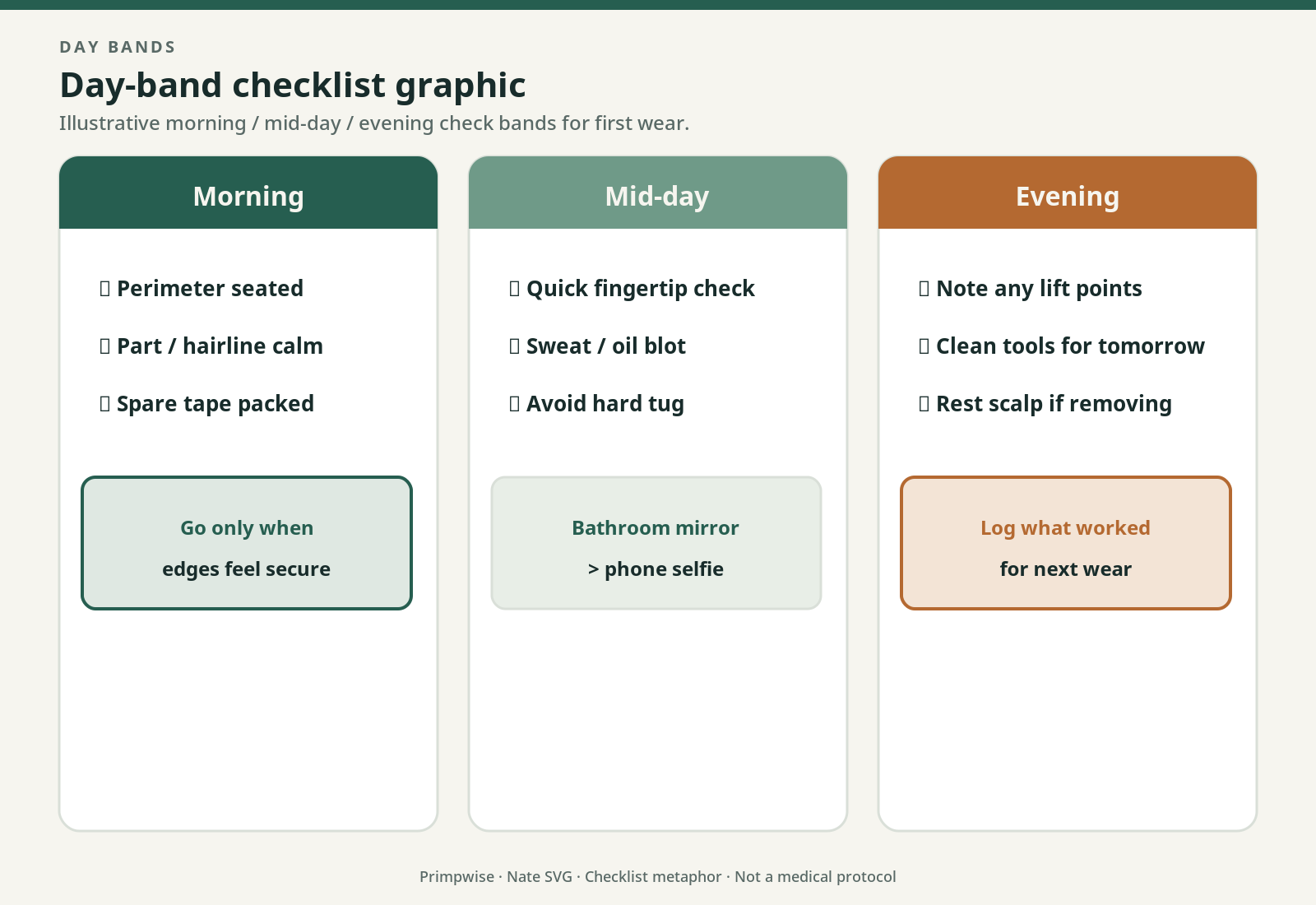
Normal on day 1: noticing weight (usually lighter than expected), mild perimeter itch as adhesive sets, frequent mirror checks, feeling “everyone is looking” (they usually are not). Natural-look expectations: how natural does a hair system look.
Day 3–5: first real tests
- [ ] Perimeter fingertip check morning and evening. Secure edge; small local lift can be cleaned and re-taped; full perimeter lift means reattach with cleaner/drier scalp prep.
- [ ] Respect the adhesive’s published wear window. Stretching “just to see” makes residue harder and irritation more likely.
- [ ] First shower after cure. Cool-to-warm rinse, pat dry with microfiber — do not rub the hairline.
Normal on days 3–5: adhesive feel continues to settle through ~48–72 hours; sides grow while the system stays static (blend later with a barber who understands systems); humidity and sleep move hair the same way bio hair moves.
Day 6–7: first removal and clean practice
- [ ] Removal: solvent → wait per label → peel back-to-front without force.
- [ ] Clean the base: remover on pad; lace often needs longer soak/press than poly wipe.
- [ ] Clean the scalp: shampoo residue and oil; dry fully before reattach.
- [ ] Note adjustments: tape placement, adhesive type, wear days — most wearers settle by cycles two and three.
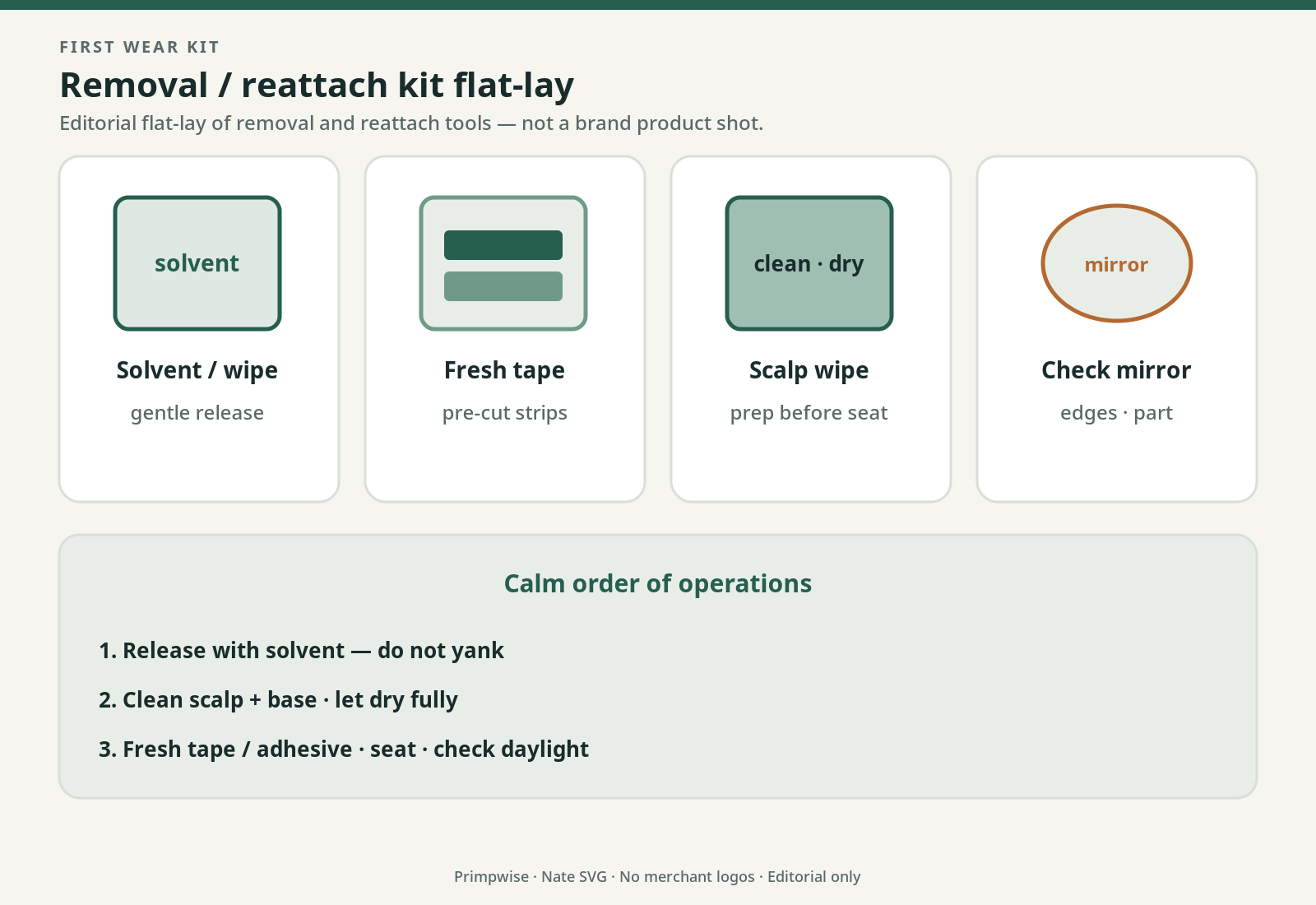
Base-specific cleaning differs: thin-skin guide vs lace guide. Material fork: lace vs thin skin.
Warning signs vs normal discomfort
| Symptom | Practical response |
|---|---|
| Mild tightness day 1–2 | Monitor; often eases as bond settles |
| Red raised rash under base | Remove; try a different tape/adhesive family next cycle; see a clinician if it persists |
| Broken / weeping skin | Remove; let skin recover before reattach |
| A few shed hairs | Common; large patch shedding → check construction / handling |
| Full lift within ~48 hours | Redo attach on clean, dry scalp |
This table is not allergy diagnosis. Persistent scalp reactions belong with a qualified clinician — Batch C will cover irritation vs allergy education separately.
Week 2 and beyond
Goals shift from anxiety to rhythm: personal clean schedule (often every 1–3 weeks by activity), optional two-unit rotation so one can rest, and a barber who can blend systems. Cost of rotation: cost breakdown.
If beginner thin-skin / simpler cleanup: Lordhair SuperSkin-V · Superhairpieces thin skin · LaVivid thin skin

If lace / breathability from week one: Lordhair lace · Superhairpieces lace · LaVivid lace
Lordhair’s public beginner framing around a V-loop thin-skin stock unit is one commonly cited first-unit narrative (SuperSkin-V).
FAQ
Should someone tell people in week one?
Personal choice. Most people will not notice. Self-consciousness usually peaks early. See natural-look scenarios above.
The system feels tight — normal?
Mild perimeter tightness early is common. Past ~48 hours or worsening pressure → check size/fold and attach. Excess base folded at edges causes pressure.
Sleeping in it?
Many wearers do. Satin/silk pillowcases reduce friction vs cotton. Follow adhesive guidance for overnight wear.
Bond lifts in the first days?
Often residual oil/moisture at attach. Clean, dry, re-tape the section — or full reattach if lift is wide.
Install channel: DIY vs salon on week one
Many first-time buyers get a cleaner emotional start with a salon cut-in even if they plan DIY reattaches later. An uncut stock unit is the fastest path to “placed” hairline anxiety. Tradeoffs: DIY vs salon. Beginners shortlist: best hair systems for beginners.
If the first base choice is still open, prefer a forgiving stock thin-skin or hybrid over the most delicate ultra-thin lace edge — unless breathability is non-negotiable. Material education: thin-skin guide · lace guide. After week one confidence questions, how natural does a hair system look sets realistic detection expectations without forum spirals.
Office or dating plans in week two: office confidence · dating guide.
Adhesive choice for week one (practical)
Tape is the forgiving beginner default on most bases; liquid bond can wait until removal feels routine. On lace mesh, stay with tape. On thin skin, tape first for several cycles is the editorial bias — see thin-skin guide and lace guide. Gym or swim in week one: wait for cure, then follow gym and swim rather than improvising.
Travel in the first month: pack the travel kit only after one successful home clean cycle. Cost of early mistakes (ruined ultra-thin film, over-ordering density): cost breakdown.
Confidence if mirror anxiety dominates week one: how natural once, then put the phone down.
Who should cut the first unit
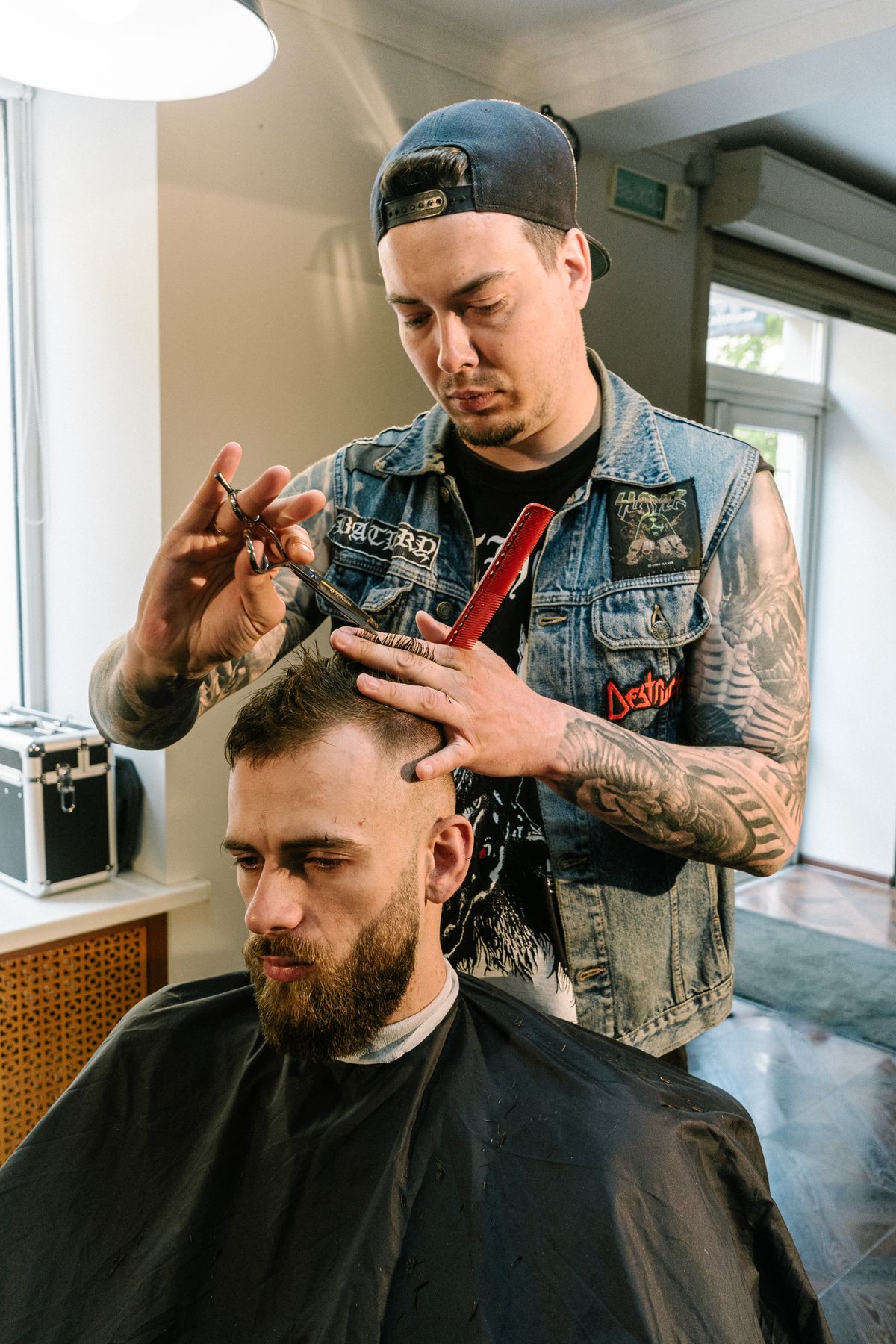
A barber or stylist experienced with systems shortens the “placed” look faster than most solo first cuts. If DIY is mandatory, cut conservatively — length is easier to remove than to put back. DIY vs salon expands the channel choice. After the cut, reassess density in daylight before ordering unit two.
Closing
Week one is checklist discipline: cure time, gentle handling, first clean cycle, and knowing warning signs from normal awareness. Then return to the beginners shortlist and men’s hub for the next unit decision.
Image credits: Barber photo: Stock photo: Antoni Shkraba / Pexels; Cover photo: Stock photo: Margarita / Pexels.
Diagrams: self-drawn by Polishwise.
Product images from Lordhair product pages, linked to the source pages.
Product images are merchant images, not photos taken by this site.