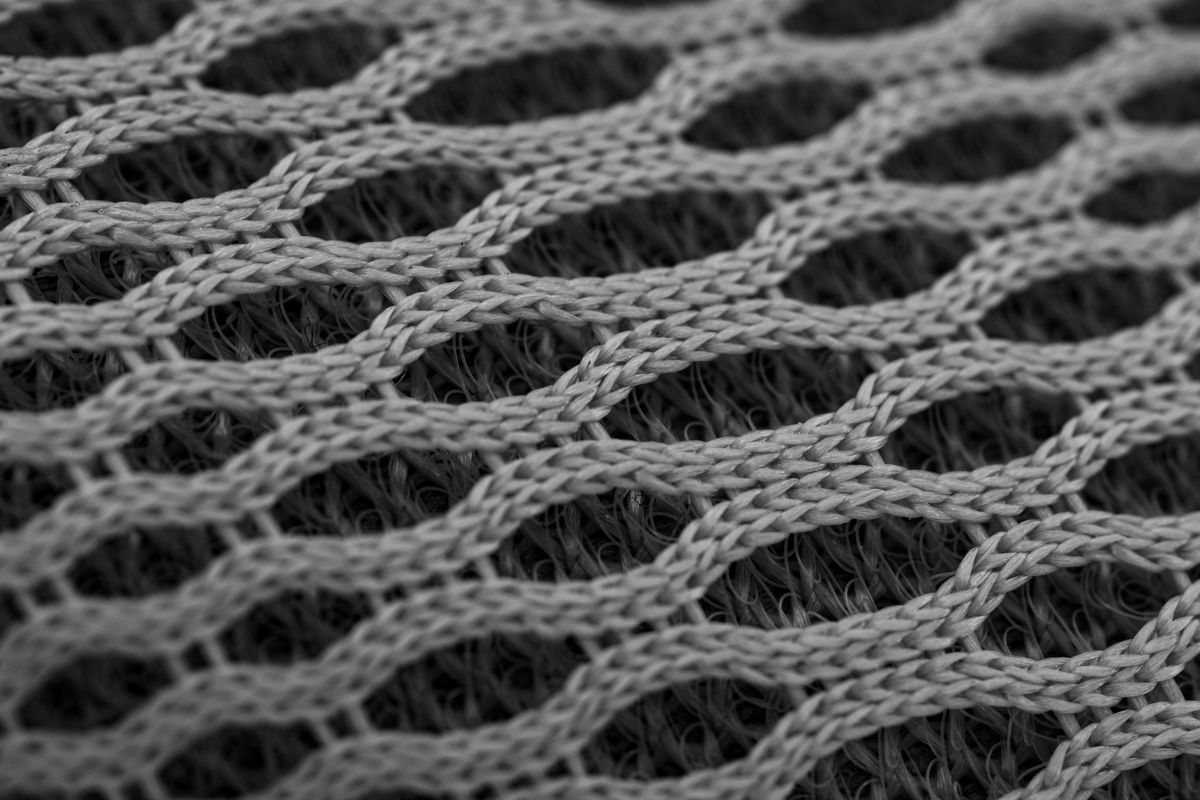
A lace men’s hair system is built on a fine woven mesh. Individual hairs are hand-tied into the mesh so air can pass to the scalp and the hairline can look soft when knots and cut are managed. This page is an education guide — what lace is, French vs Swiss language, knot and bleach basics, the tape-not-glue rule, cleaning without tearing, full lace vs hybrid, and who lace fits. It is not a multi-brand Best-of — for conditional SKU shortlists see best lace hair systems for men. Compare against poly: lace vs thin skin. Hub: men’s shortlist. Specs are Public specs (as published; verify on brand site).
What lace is (and why mesh matters)
Lace bases are open weave. That design matters because:
- Air moves through the base — meaningful in heat, gym, and humid climates.
- Knotted hairs can move with more multidirectional freedom than some injected skins.
- Weight on the scalp is typically low.
- A well-managed front can read as soft growth rather than a solid edge.
Trade-off: mesh is more delicate than solid PU. Adhesive technique and patient cleaning matter more.
French lace vs Swiss lace (market language)
| French lace (typical framing) | Swiss lace (typical framing) | |
|---|---|---|
| Mesh | Medium-fine | Ultra-fine |
| Durability | Often longer published cycles | More fragile / shorter |
| Visibility | Slightly more visible under extreme close light | Marginally more invisible |
| Buyer fit | Everyday durability + realism balance | Max invisibility when handling skill is high |
For most everyday wearers, French-style lace is the practical default; Swiss-style fineness is a deliberate fragility trade. Confirm what each merchant actually stocks — names vary.
Public hubs: Lordhair lace · Superhairpieces lace · LaVivid lace collection.
Hairline knots and bleach
Front hairs are often single-knotted so they lie flatter. Unbleached knots can show as tiny dark dots under hard light; bleached knots reduce that tell and can slightly weaken the knot. Everyday conversation distance usually forgives good unbleached work with correct density and cut; bleach is a close-range preference, not magic.
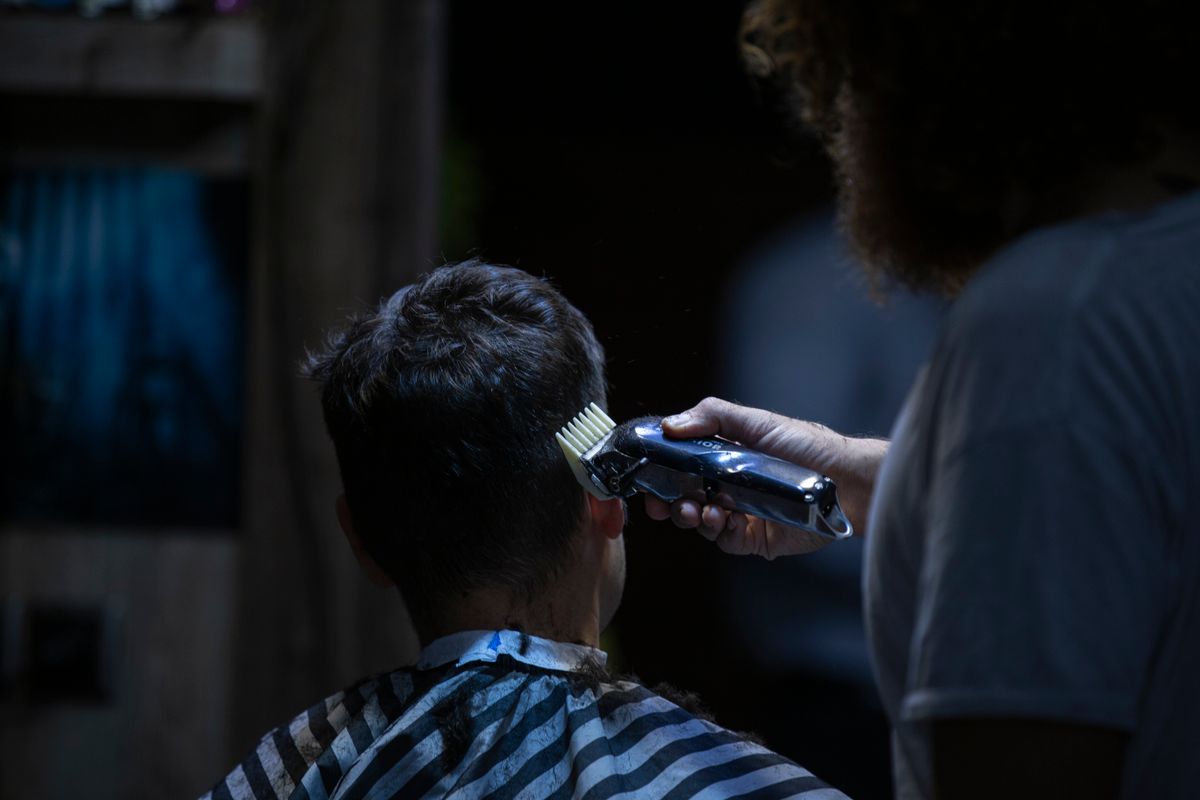
Density still dominates “fake” complaints — same percentage often looks lighter on Swiss lace than on mono (SHP density guide). Soft hairline expectations: how natural does a hair system look.
Attachment rule: tape on lace mesh
Do not flood lace mesh with liquid glue. Glue wicks into the weave, stiffens the base, and creates residue that is hard to remove without damage.
Practical approach:
- Perimeter tape on the base edge for clean lift.
- Some lace-front workflows place tape on the scalp and press lace down — follow attach education carefully.
- On hybrids, liquid bond may belong on PU perimeter zones — not in the lace field.
First attaches: first-wear checklist · DIY vs salon.
Cleaning lace without tearing
Lace needs patience. Force-peeling undissolved tape tears mesh.
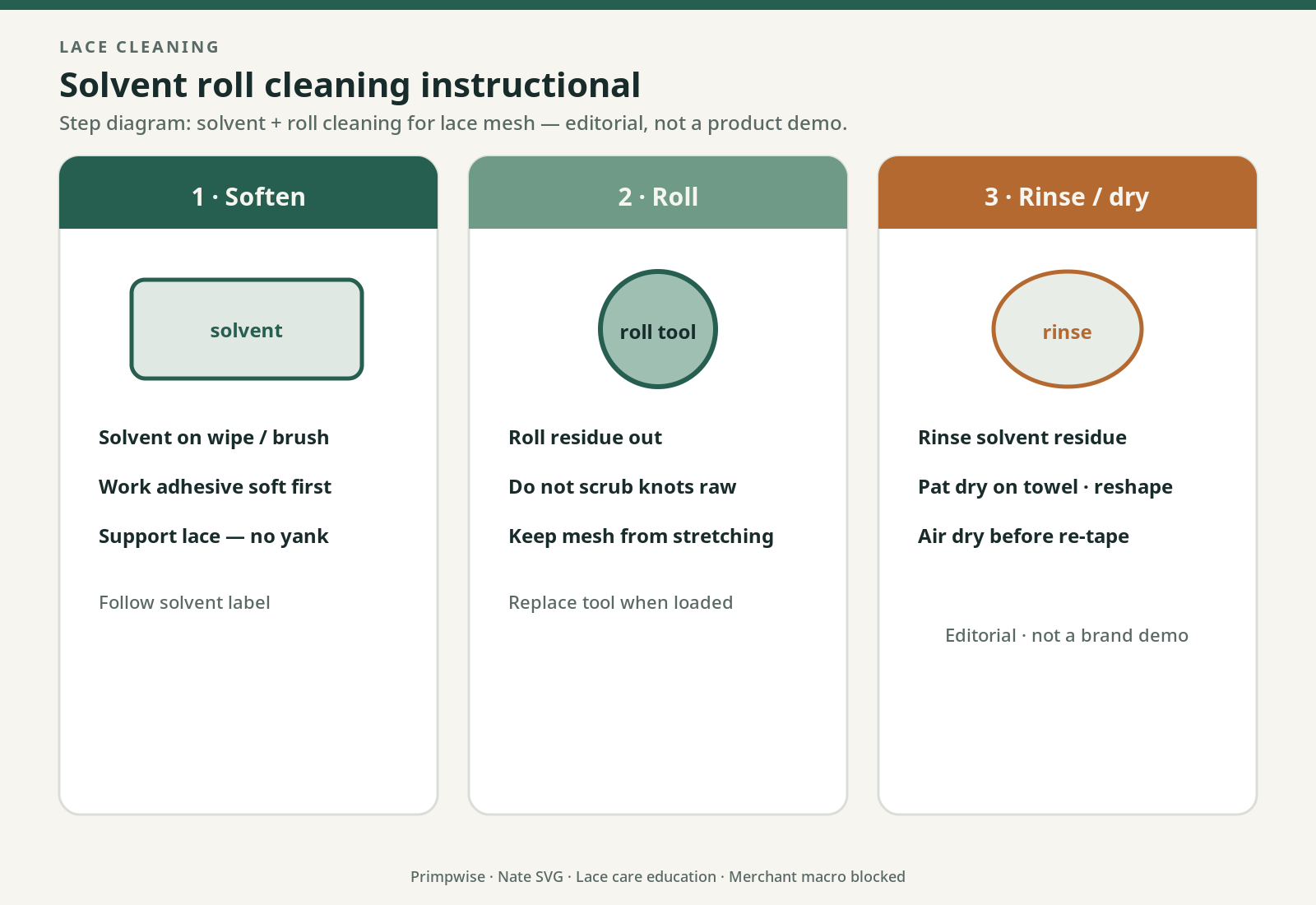
- Press/soak remover on residue; give solvent time.
- Roll the pad — do not scrub laterally against knots.
- Heavy buildup: longer solvent dwell beats force.
- Rinse cool after cleaning.
Poly wipe habits from the thin-skin guide do not fully transfer — lace wants soak discipline.
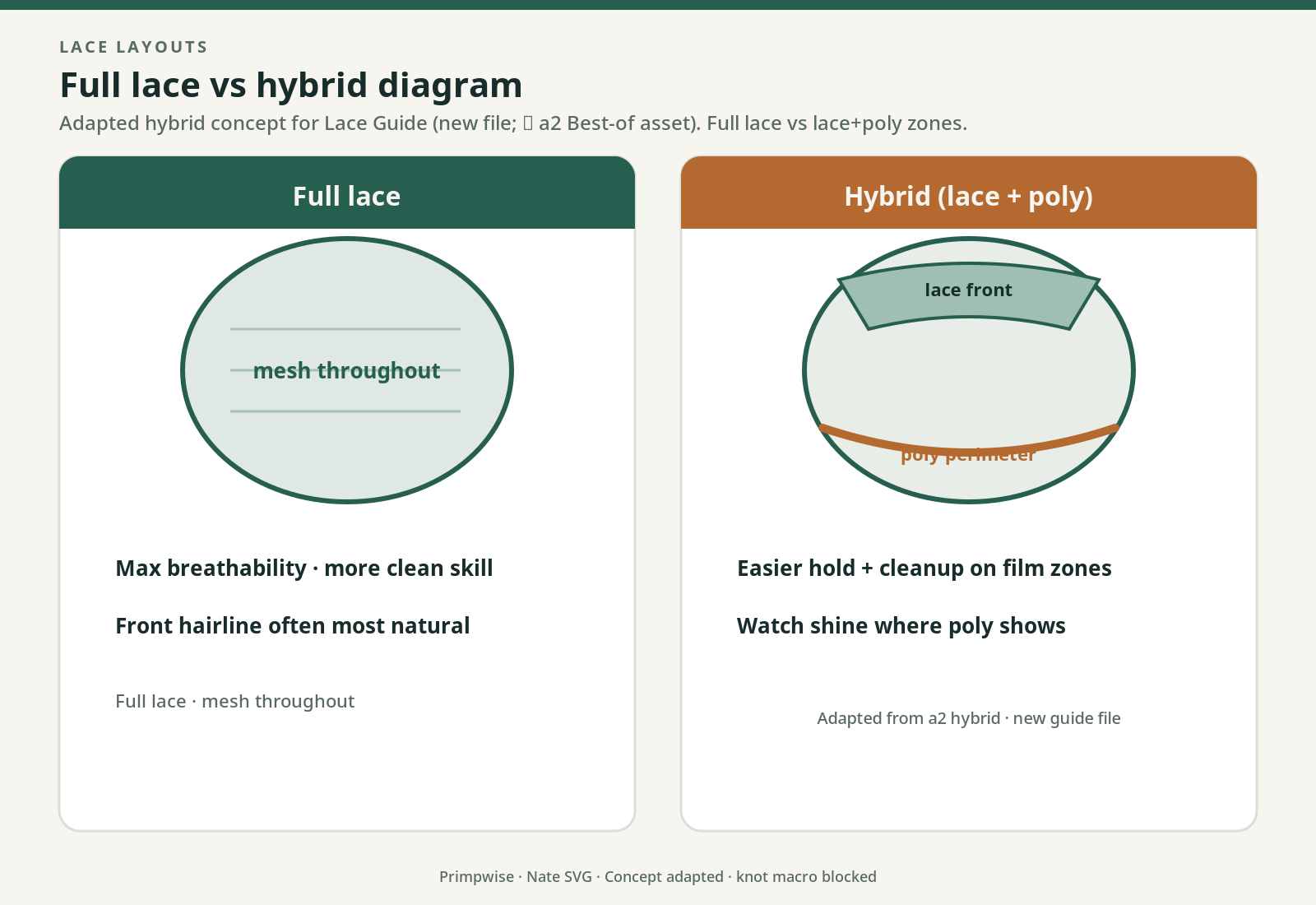
Full lace vs hybrid
| Construction | Strength | Watch-outs |
|---|---|---|
| Full lace | Max breathability; styling freedom | More mesh to clean; tape skill across edges |
| Lace front + PU perimeter (hybrid) | Soft front + tape-friendly seal | Slightly less total venting; zone care |
Superhairpieces publishes a hybrid hub worth checking when pure full lace feels too delicate for DIY. Many first-time buyers start hybrid for that reason.
Lace for activity and climate
Lace is the consistent recommendation when sweat, sport, or heat dominate — gym · swim · humid travel. Office wearers who run warm also often prefer lace comfort (office confidence).
Lifespan and care snapshot
With careful removal and cleaning, lace units are commonly framed for multi-month wear windows — longer than ultra-thin skin’s shorter published cycles — but swimming, heavy sweat, and rough peel shorten life. Track personal cycles; model cost on the cost breakdown rather than inventing annual dollars here.
Conditional CTAs
If lace is the gate: Lordhair lace · Superhairpieces lace · LaVivid lace
If hybrid / DIY-friendlier perimeter: Superhairpieces hybrid
If thin skin wins instead: thin-skin education · Lordhair SuperSkin-V · LaVivid thin skin

For which lace SKUs to buy after education, use the lace Best-of — Best-of = who to buy; this page = what lace is.
FAQ
Does lace itch?
Mesh itself is usually not the itch source. Perimeter sweat/oil buildup is. Lace often itches less from heat than full poly. Weekly hairline clean-ups help.
How long does French lace last?
Multi-month ranges are common public framing with good care; activity and removal technique dominate variance. Rotate two units when possible.
Lace for office and dating?
Yes — breathability is not “gym only.” Soft knotted hairlines suit professional and social distance when density/cut are right.
Is lace more expensive than thin skin?
Per unit, sometimes slightly higher list prices; per month, longer cycles can win. Verify live prices; see cost breakdown for TCO thinking — no invented SKU dollars here.
Common lace mistakes (and fixes)
| Mistake | Fix |
|---|---|
| Liquid glue soaked into mesh | Stay on tape for lace fields; retire a glue-stiffened unit if mesh is ruined |
| Scrubbing residue dry | Solvent dwell + roll |
| Over-dense stock cut | Thinning only with skill; better to order lighter next cycle |
| Skipping blend cut | Barber who knows systems — or careful DIY after education |
Beginner path: first-wear · how to choose · beginners Best-of.
Stock vs custom for lace
Prove tape skill and knot comfort on stock lace or hybrid before custom lace commissions. Stock vs custom · beginners Best-of. Shopping spoke after education: lace Best-of. Cost modeling for multi-month lace cycles vs frequent ultra-thin skin swaps: cost breakdown.
Lace and photography
Lace fronts photograph well in ambient light when knots and density are managed; hard flash at close range can still reveal mesh. Matte finish helps. Scenario detail: how natural does a hair system look. Office webcam light: office confidence.
Closing
Lace is the breathable mesh family: tape discipline, patient cleaning, and density/cut at the hairline. Compare on lace vs thin skin, shortlist on the lace Best-of and men’s hub, and lock first-order gates on how to choose.
Image credits: Barber photo: Stock photo: mostafa meraji / Pexels; Cover photo: Stock photo: Patrick / Pexels.
Diagrams: self-drawn by Polishwise.
Product images from Lordhair product pages, linked to the source pages.
Product images are merchant images, not photos taken by this site.