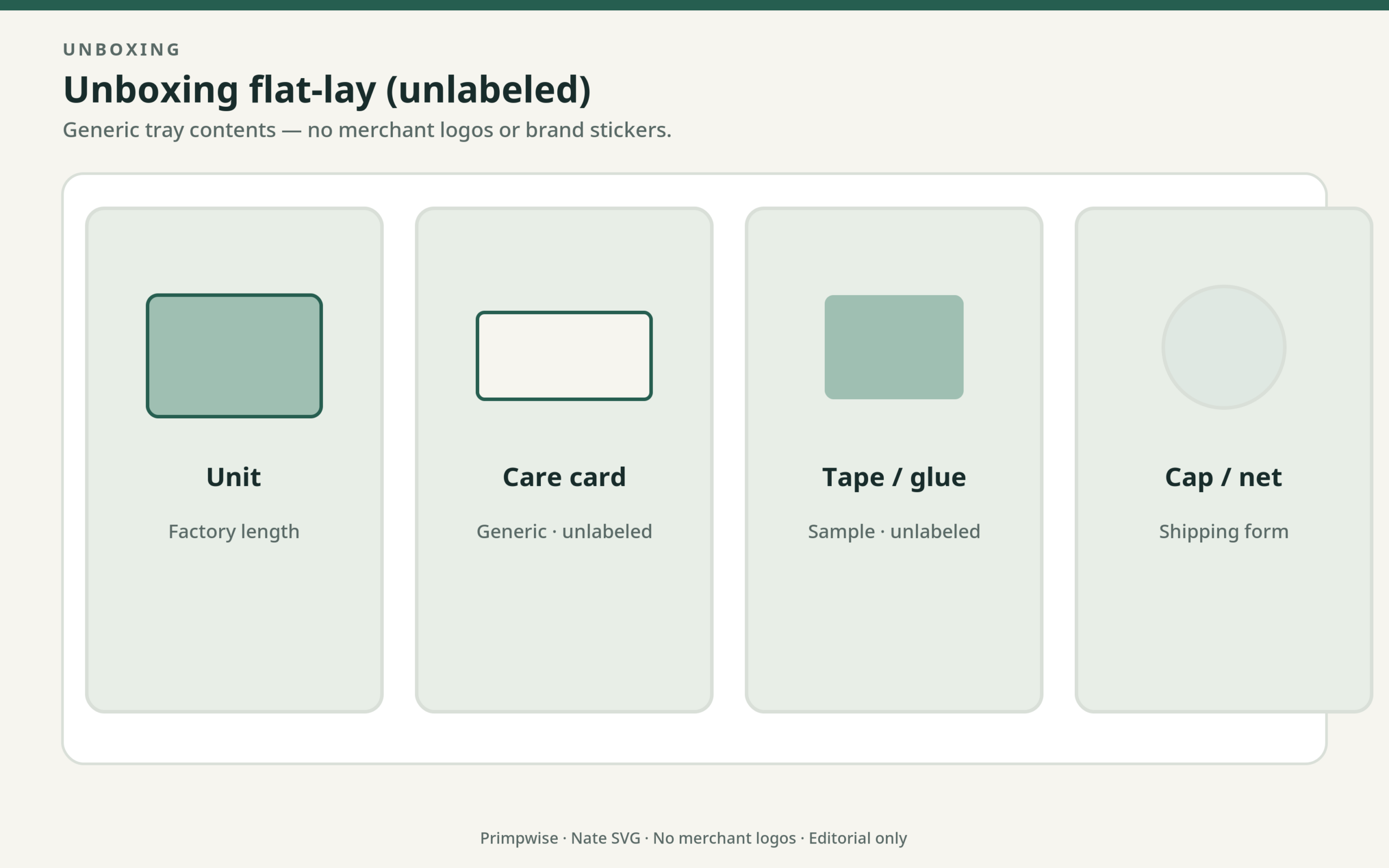
Opening a stock men’s hair system and holding it to the mirror before bond and cut-in is a common panic moment: the hair looks too long, too shiny, too thick at the front, and somehow “wiggy.” That reaction compares a manufacturing state to a finished social haircut. Most of the gap closes after a proper attach and a dry cut-in — not after a panic return. Specs mentioned are Public specs (as published; verify on brand site).
Set expectations with first-wear checklist, cut-in channel via DIY vs salon, and decision gates via how to choose a hair system. Product shortlists: best hair systems for men 2026.
Four things that lie on day zero
1. Factory length is margin.
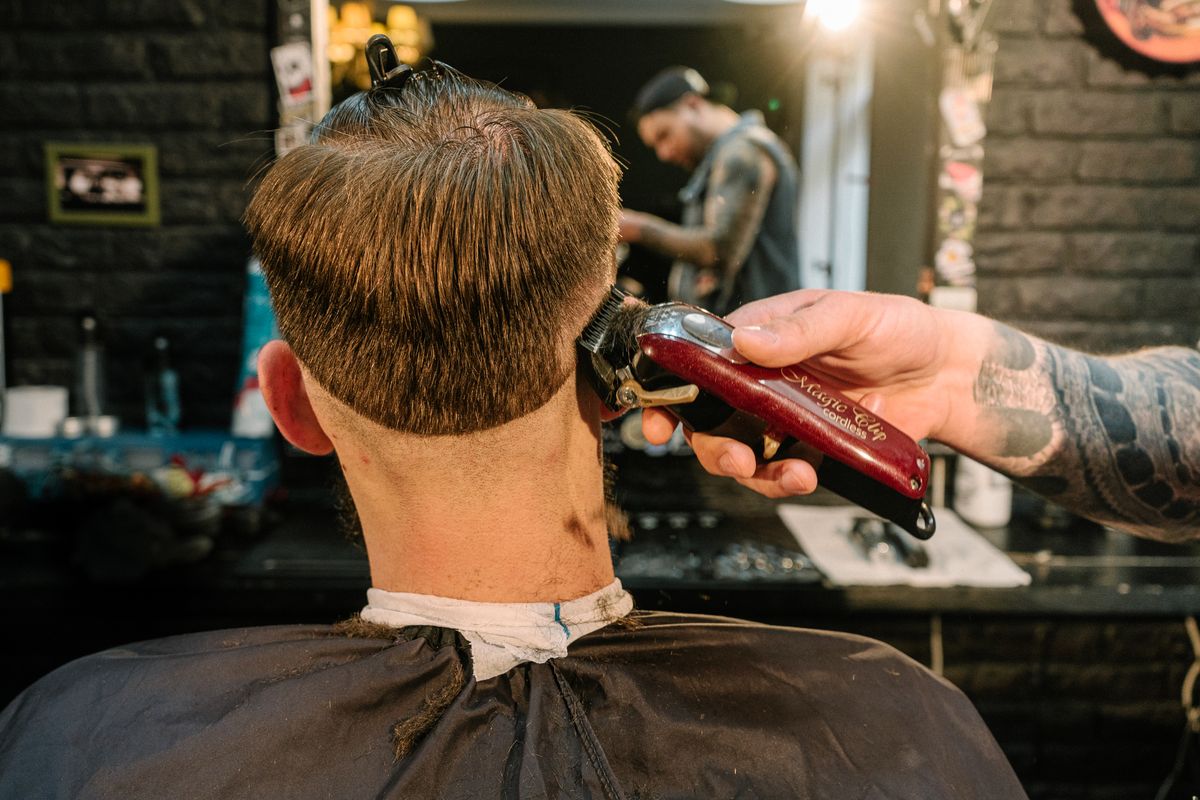
Sellers ship extra length so a stylist (or careful DIY cutter) can thin, layer, and recover from a cautious first pass. A mullet silhouette in the box is inventory, not the intended street look. Cut-in rules: can a regular barber cut a hair system.
2. Shine reads plastic under bathroom LEDs.
Factory coatings plus warm bulbs exaggerate sheen. A gentle wash with a system-appropriate shampoo, a matte styler kept off the bond line, and a daylight check often kill the panic before support tickets.
3. Uniform hairlines look fake until texturized.
Even good ventilation can look too even until a barber adds irregularity and softens the front. Present-day realism checklist: how natural does a hair system look.
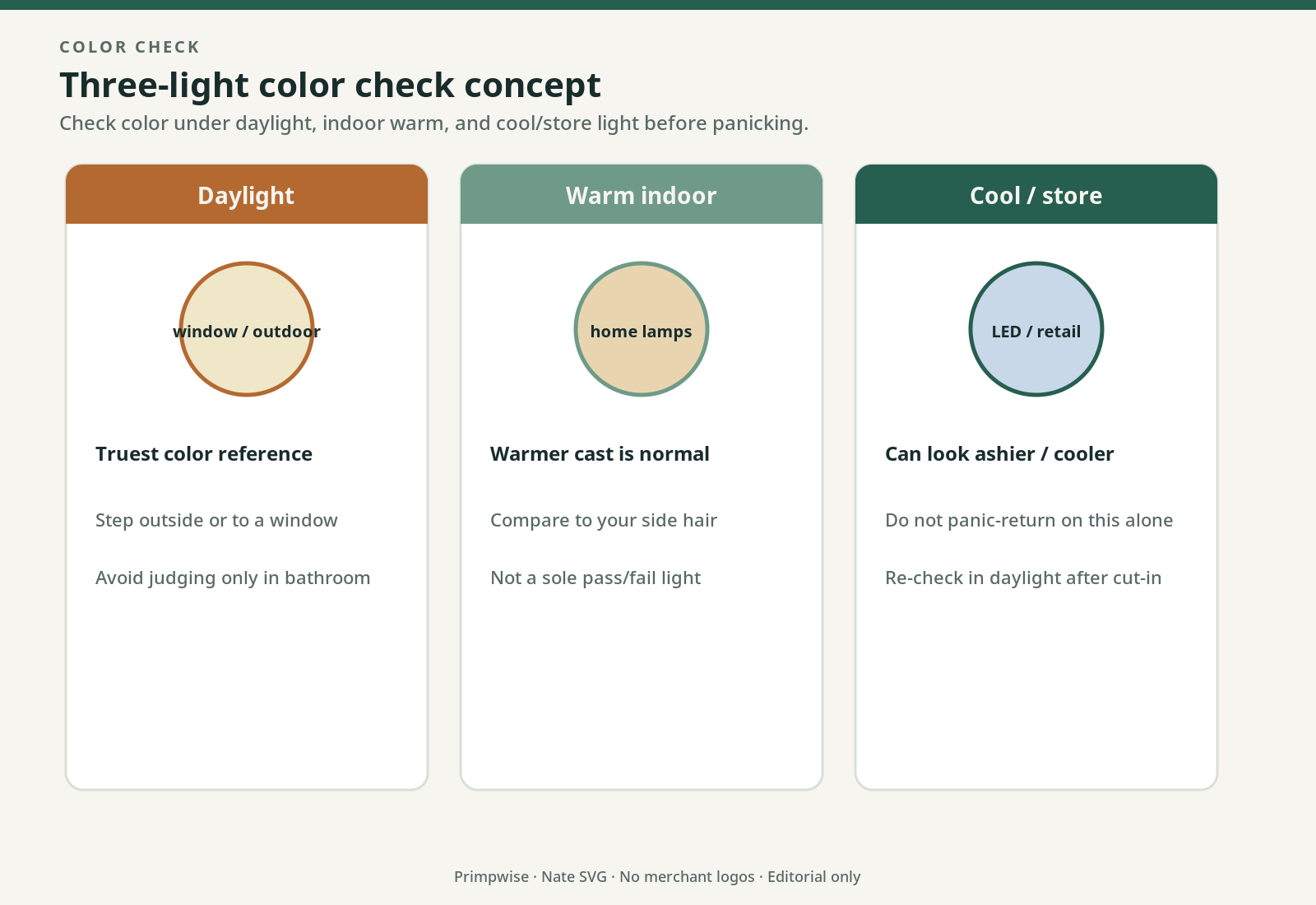
4. Color shifts between packing light and daylight.
Judge color against bio sides/temples outdoors or near a window after install — not only under yellow bathroom LEDs. When between shades, public buyer guidance often biases lighter; verify on merchant color charts.
Why the mirror lies before the bond
Off-head, a base can cast shadows or bubble when held with one hand. Bonded flat, lace or thin skin follows scalp curvature and the silhouette often drops into a believable line. Community “box shock” themes repeatedly advise one honest attach before declaring density disaster.
Density illusion before cut-in
Higher published density bands can look heroic in packaging and toy-like until front bulk is removed. Lighter bands can look sparse in the bag yet blend once border wisps meet temple bio hair. Merchant density education (for example Superhairpieces’ stylist density guide) exists because this illusion is common (SHP density guide).
Finalize judgment after cut-in plus a day or two of real movement — not at unboxing.
The three-light color check
Judge color and density three times:
- Bathroom warm light (worst-case yellow bias).
- Office / neutral indoor light (where colleagues see the wearer).
- Outdoor shade (where partners walk beside them).
If two of three look acceptable after cut-in, the third is usually vanity lighting — not proof the order failed.
When “different” may actually be a defect
Support conversations are more reasonable when:
- The base family does not match the order (lace vs skin mismatch).
- Color is clearly off in daylight against a controlled bio-hair compare — not only under one bulb.
- Construction shows bald patches or a snapped front row before wear.
They are not reasonable when the only complaint is “uncut looks weird.” Follow the merchant’s published return window and photo requirements; do not invent policies here.
Week-one sequence (expectation curve)
| Window | What usually happens |
|---|---|
| Day 0–1 | Bond unfamiliar; mirror checking spikes — normal |
| Day 2–4 | First dry cut-in locks silhouette — most “wig panic” drops here |
| Day 7–14 | Wash rhythm + optional tweak appointment — density blends mentally |
Walk the rhythm on first-wear checklist. Channel for the cut: DIY vs salon.
Maintenance preview (why shine returns)
Finger oils, silicone-heavy supermarket shiners, and dry-shampoo creep migrate toward the root and recreate day-zero shine weeks later. System-appropriate wash discipline from first-wear habits matters more than return labels when post-cut sheen returns. Keep stylers on mid-lengths and ends — not the bond ring — and re-check under the three-light rule before declaring the unit “wrong.”
If density still feels heroic after a competent cut-in, the order may simply be a higher band than bio sides support — revisit how to choose density gates rather than only blaming packaging.
Conditional shopping once expectations are set
If first unit and simpler cleanup: Lordhair SuperSkin-V · Superhairpieces thin skin · LaVivid thin skin

If lace front planned with a dry-cut barber: Lordhair lace · Superhairpieces lace · LaVivid lace
Stock size and density labels are not the finished look
Public stock panels (often discussed around a contour-trimmed standard base) and published density percentages describe inventory, not the social silhouette after blending. An 80% band can look thin in the bag and correct after temple blend; a 120% band can look heroic in packaging and toy-like until the front is de-bulked. That is why density education pages exist on merchant sites — and why cut-in belongs in the first-week plan, not the “maybe later” pile (how to choose; first-wear checklist).
Emotional framing without shame
Box shock is common enough that wearer communities treat it as a rite of passage. The productive response is mechanical: bond flat, schedule dry cut-in, check color in daylight, then decide. Shame-driven returns for length alone burn money and delay the only step that usually resolves the mirror panic.
Photo checklist if contacting a merchant
Daylight full-face and top-down crown (no flash), order/SKU visible in another frame, and a steady macro of the front if ventilation is the claim. Length and shine alone are weak return reasons; structural mismatch and daylight color miss are stronger.
FAQ
Should someone return a unit that looks fake before cutting?
Not for length or shine alone. Finish bond + cut-in, then judge. Structural SKU mismatch is the exception.
How long until it looks normal?
Many men land an acceptable silhouette in the first cut-in appointment and refine after the first wash cycle.
Is higher density usually the culprit?
Often yes when front bulk was never thinned. Compare expectations against merchant density education and bio sides.
Does thin skin look darker when glued?
It can read slightly richer when film and adhesive stack — re-check color in daylight after install.
Closing
Box shock is a manufacturing-to-social gap, not automatic proof of a bad order. Plan cut-in and first-wear logistics first, use how to choose for gates, then shop the men’s shortlist with realistic density and base choices.
Image credits: Barber photo: Stock photo: Antoni Shkraba / Pexels; Cover photo: Stock photo: Kaboompics / Pexels.
Diagrams: self-drawn by Polishwise.
Product images from Lordhair product pages, linked to the source pages.
Product images are merchant images, not photos taken by this site.