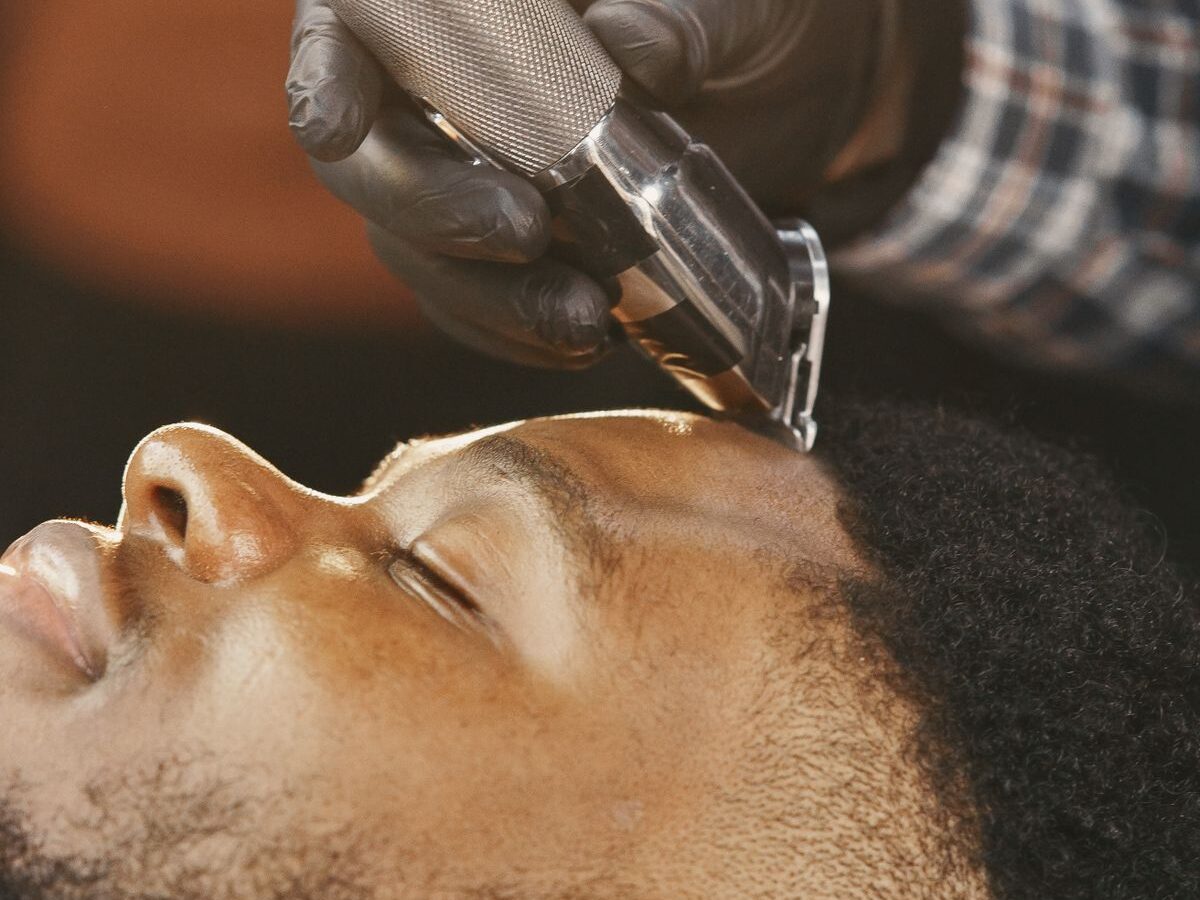
Yes — a skilled regular barber can cut and blend a bonded men’s hair system when a few non-negotiables are clear up front: the unit is already attached, cutting is mostly dry, and the side/back transition is thinned gradually so there is no hard shelf where system hair meets bio hair. Specialist experience helps for extreme fades and high-stakes events, but it is not mandatory for every first cut-in. Specs and process notes are practical grooming guidance (verify with the stylist and adhesive labels).
Product context after the cut plan is clear: men’s shortlist. Install channel choice: DIY vs salon. Week-one logistics: first-wear checklist.
What “regular barber” means here
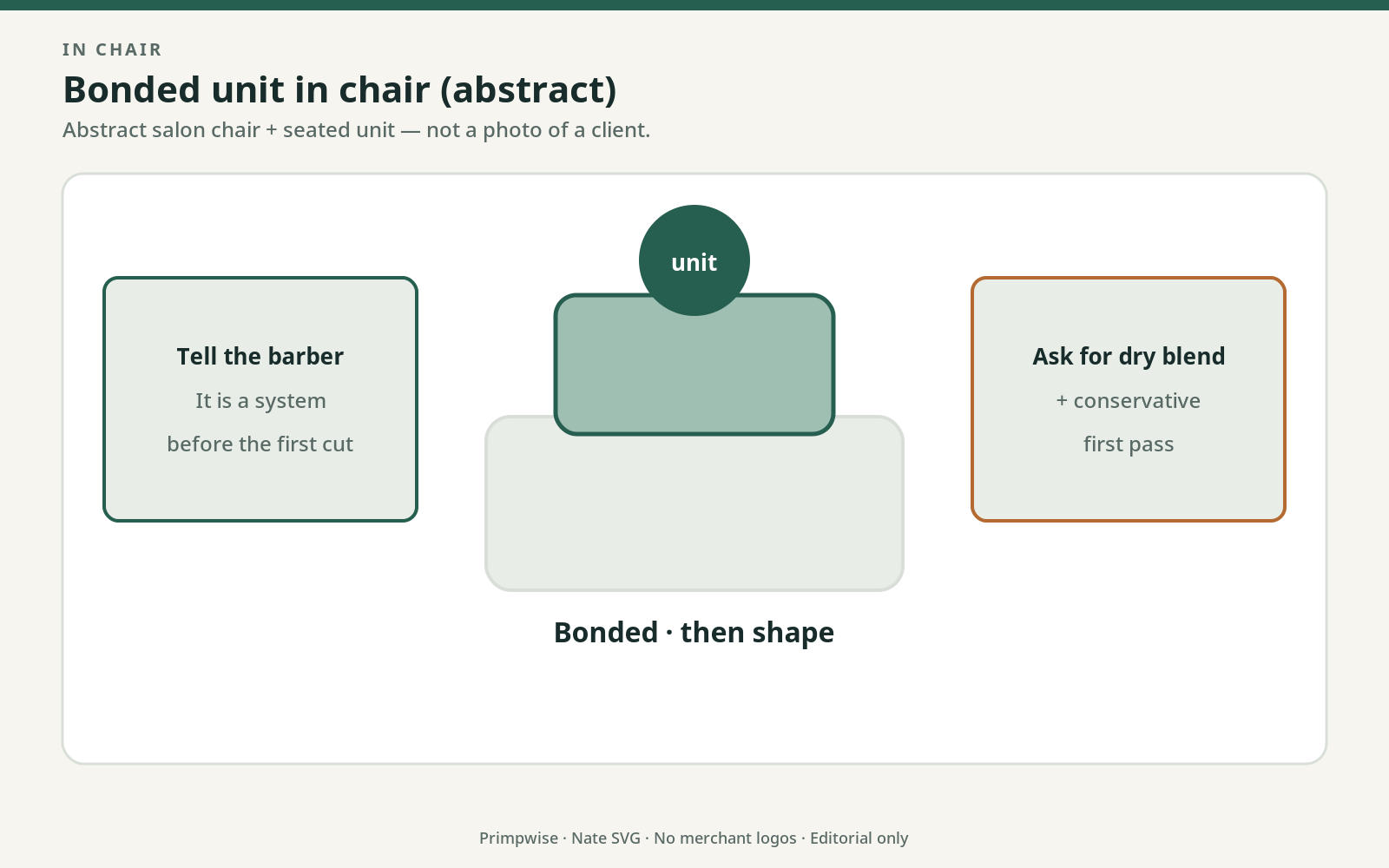
“Regular” means competent with scissors and clippers — not necessarily someone who advertises hair systems. Success depends on willingness to follow three rules:
| Rule | Why |
|---|---|
| Bond first, cut second | The piece must sit where it will live; loose cutting creates uneven lines |
| Mostly dry cutting | System hair does not shrink and rebound like wet bio hair in the ways many wet-cut habits assume |
| Gradual de-bulk at the blend | One heavy thinning pass at the perimeter creates the classic tell |
If a barber refuses dry cutting, lifts the frontal edge “to see better,” or jokes that “it grows back,” that is a stop signal — not rudeness for its own sake. System length does not regenerate.
Two appointments that should not be mixed
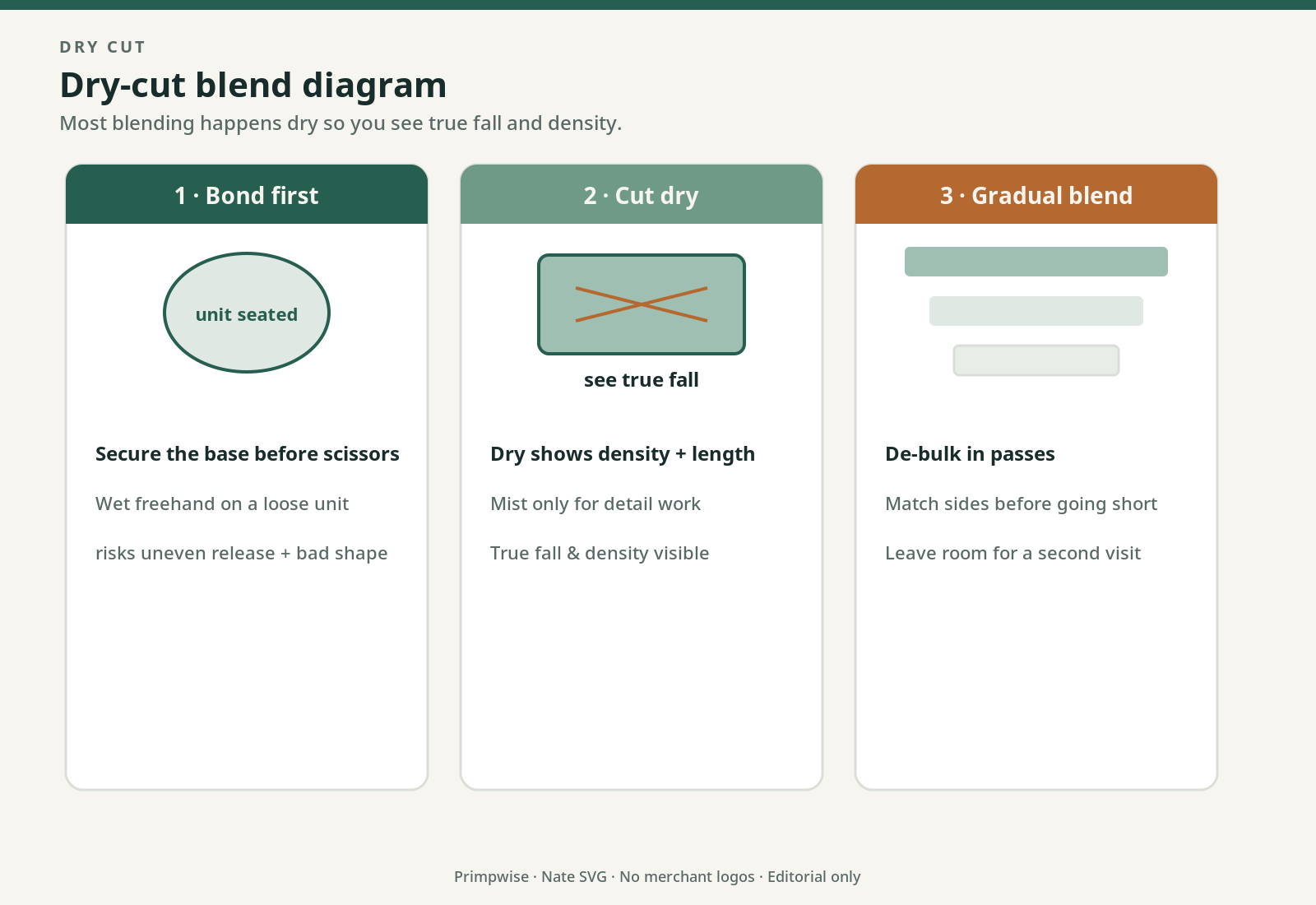
A) System cut-in / style (first serious shape)
Unit is worn and bonded. Goals: length, texture, fade transition, part, fringe. Book extra time — often closer to a premium appointment than a five-minute clipper fade.
B) Bio-sides / back maintenance
Many wearers remove the unit for a quick clipper pass on bio hair only, then reattach on schedule, to avoid nicking the blend zone. Some salons edge bio hair carefully with the system on — that requires the stylist to map the join line first.
Treat cut-in and bio-only trims as different jobs until both client and barber know the map (first-wear checklist for early-cycle timing).
What to tell the stylist before scissors move
A short pre-appointment message prevents wet-cut muscle memory from wrecking a unit:
- This is a bonded human-hair system — length does not grow; leave margin and refine at the end.
- Prefer mostly dry cutting; light mist for control is fine; avoid a full soak.
- Blend sides/back with multiple light thinning passes, starting roughly an inch above the base edge — no blunt shelf.
- Front/top can be shaped like a normal men’s cut once bulk is balanced.
- Reference photos attached — realistic for current density, not an impossible slick-back on the wrong front construction.
Merchant education pages that discuss density and cut expectations (for example Superhairpieces’ density guide) help set photo realism before the chair (SHP density guide).
Mistakes that waste a unit
- Cutting to “grow out.” System hair does not grow.
- One aggressive thinning bite at the perimeter instead of stair-stepped lightening.
- Chasing an impossible reference (severe slick-back on a front that was never built for that silhouette).
- Rushing bond cure the morning of the appointment — peel risk rises; prefer a cured bond window.
Out-of-box length and shine before cut-in are normal manufacturing states — see why a hair system looks different out of the box.
Finding experience when the town has no “hair system” specialist
Search order that stays practical:
- Local wearer referrals and portfolios that show finished blends, not only marketing language.
- Consultation-only slots to show the piece off-head and agree on dry-cut rules.
- For the first high-stakes cut-in, some men day-trip to a city specialist, then maintain bio hair locally.
DIY cut-in is possible for careful wearers; the risk surface is permanent over-cutting. Channel choice belongs on DIY vs salon.
Aftercare: why a one-week tweak helps
Salon light, bathroom LEDs, and outdoor shade read density differently. A short follow-up catches leftover bulk, part preference after the first wash, and bio-edge fade adjustments. Cancel if day-one is already right — the slot is insurance, not mandatory theater.
Conditional shopping after cut-in is planned
If beginner-friendly thin skin before first barber visit: Lordhair SuperSkin-V · Superhairpieces thin skin · LaVivid thin skin

If lace / soft front once a dry-cut barber is lined up: Lordhair lace · Superhairpieces lace · LaVivid lace
Gates before buying: how to choose.
Specialist vs regular: when to pay for experience
Specialist system stylists earn their fee on extreme fades, long layered looks, diffusion-heavy photo jobs, and rescue cuts after a bad first pass. For a conservative short crop with a soft side blend, a careful regular barber following dry-cut rules is often enough. The costly failure mode is confident wet-cut habits on a non-regenerating unit — not the absence of a “hair system” keyword on the shop window.
If the appointment is also the wearer’s first bond day, split the risk: install and cure on a quieter day, cut-in after the adhesive window is healthy (first-wear checklist; DIY vs salon).
Tools language that helps
Thinning shears and careful texturizing remove bulk without shelves. Straight-razor feathering helps some stylists soften fronts. Clippers belong mostly on bio hair unless the plan explicitly maps system length with guards. Communicate zones out loud: “system from here forward; bio from here back.”
Tipping and time (practical, not etiquette law)
First cut-ins often run longer than a standard fade. Where tipping culture applies, treating careful dry-cut blending like a premium appointment increases the odds the same chair remembers the map next month. Time and complexity are the honest levers — not guilt.
FAQ
Should the system be on or off during the haircut?
For cut-in of system hair: on and bonded. For bio-only maintenance: many wearers remove the unit. Never leave the barber guessing where the base ends.
Can clippers be used on system hair?
Carefully, with clear system-vs-bio zones. Freehand digging at the blend line is how accidents happen.
Why do sellers ship units long?
Extra length is blending margin for texturizing — not the finished social haircut.
Is dry cutting mandatory?
Strong default yes. Light misting for control is fine; full wet-down invites bio-hair habits that do not map cleanly onto system fiber.
Closing
A regular barber succeeds with bonded units when dry cutting, gradual blending, and “it does not grow back” are explicit. Line up that appointment alongside first-wear logistics, then shop from the men’s shortlist once base and density gates are locked.
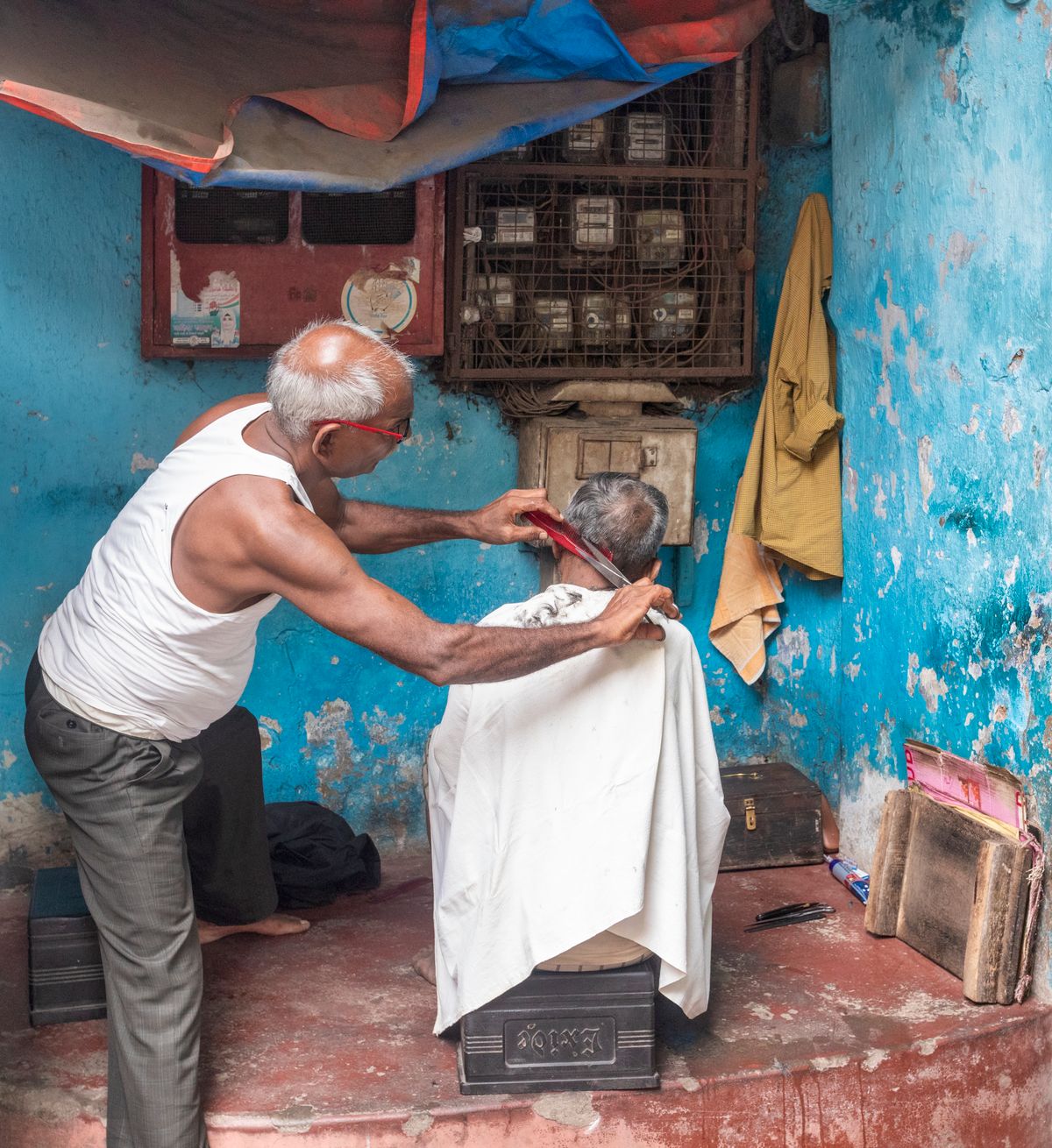
Image credits: Barber photo: Stock photo: Robert Stokoe / Pexels; Cover photo: Stock photo: Gustavo Fring / Pexels.
Diagrams: self-drawn by Polishwise.
Product images from Lordhair product pages, linked to the source pages.
Product images are merchant images, not photos taken by this site.