A well-fitted, properly cut men’s hair system is usually undetectable in ordinary daily life — across a room, at arms-length conversation, in most photos, and outdoors in normal light. “Usually” is not “always.” The situations that still give systems away are specific: harsh overhead light, unexpected peel at the hairline, or a density/color mismatch with the sides. This page answers the present-day “does it look fake?” question with scenario-by-scenario honesty — not a history of how materials evolved (that angle belongs elsewhere). Specs mentioned are Public specs (as published; verify on brand site).
For multi-brand product context, see the men’s hair system shortlist. For the base fork that most affects close-range realism vs breathability, use lace vs thin skin.
The honest baseline
Modern stock and custom systems use human hair on lace, thin-skin (poly), hybrid, or mono bases. Bases can be thin enough that, at normal distance, the edge reads as scalp rather than a “piece.” That still leaves three preventable tells that dominate community “looks fake” themes:
- Density too high for bio hair on the sides/back.
- Hairline too perfect — ruler-straight, uniformly dense, uncut stock front.
- Color too dark once bonded compared with sides in daylight.
None of those require exotic technology to fix. They require matching, cutting, and daylight color checks. Decision order for first orders: how to choose a hair system.
Scenario 1: Passing on the street
Strangers at walking distance see hair, not mesh. Medium-light density with a cut that matches face shape passes here consistently. Street distance is the easiest test; if the unit fails here, density or cut — not brand marketing — is usually the problem.
Scenario 2: Conversation at arms length
Two to three feet is where the hairline becomes the critical surface. Natural hairlines are slightly irregular and softer at the very front. Public constructions that help include V-loop or carefully managed lace fronts, and thin-skin edges that mimic scalp when thickness and color match. What draws attention is an overly perfect, uniformly dense straight line — observers may not name “system,” but they register “off.”
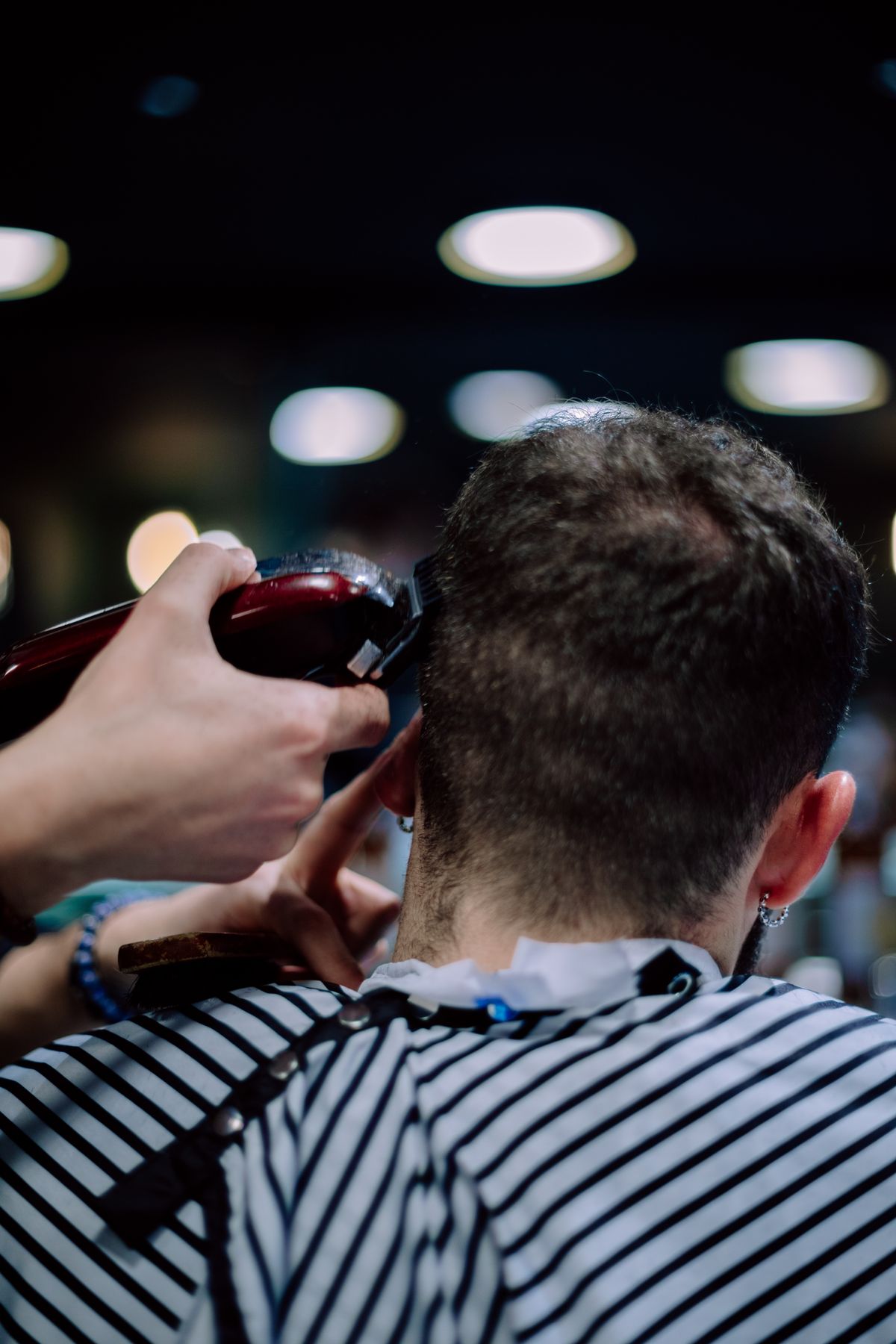
A stylist who has cut systems can break up the front after the first fitting. DIY buyers should budget that cut-in skill or a salon visit (DIY vs salon).
Scenario 3: Photographs and flash
- Outdoor daylight / indoor ambient: human hair reflects like bio hair; most casual photos look fine.
- Direct close flash: higher risk — hard light can reveal a thin-skin edge sheen or lace mesh texture under about three feet.
Party and phone photos are rarely close or harsh enough to expose a well-cut unit. Studio portraiture and professional video lighting sit closer to the edge. Matte finish products help more than chasing “more density.”
Scenario 4: Wind and movement
System hair moves like human hair when the cut is layered. Uniform “helmet” lengths can lift as a block and look wrong. Texturizing and blending with side hair solve most wind tells. Normal wind does not peel a healthy perimeter the way upward yank at the lace edge can.
Scenario 5: Someone runs a hand through the hair
Honest answer: fingertips may feel a surface slightly different from bio scalp — thin film or fine mesh. Most people who are not hunting for a system do not label what they feel. Partners who have been told, or who are mapping the hairline on purpose, are the main audience for this scenario.
If close tactile undetectability is the priority, many buyers bias toward ultra-thin skin constructions (public thickness tiers vary by brand — verify mm on the listing) or a well-managed lace front. Tradeoffs vs breathability: lace vs thin skin. Practical touch boundaries: can someone touch your hair system.
Scenario 6: Very bright overhead light
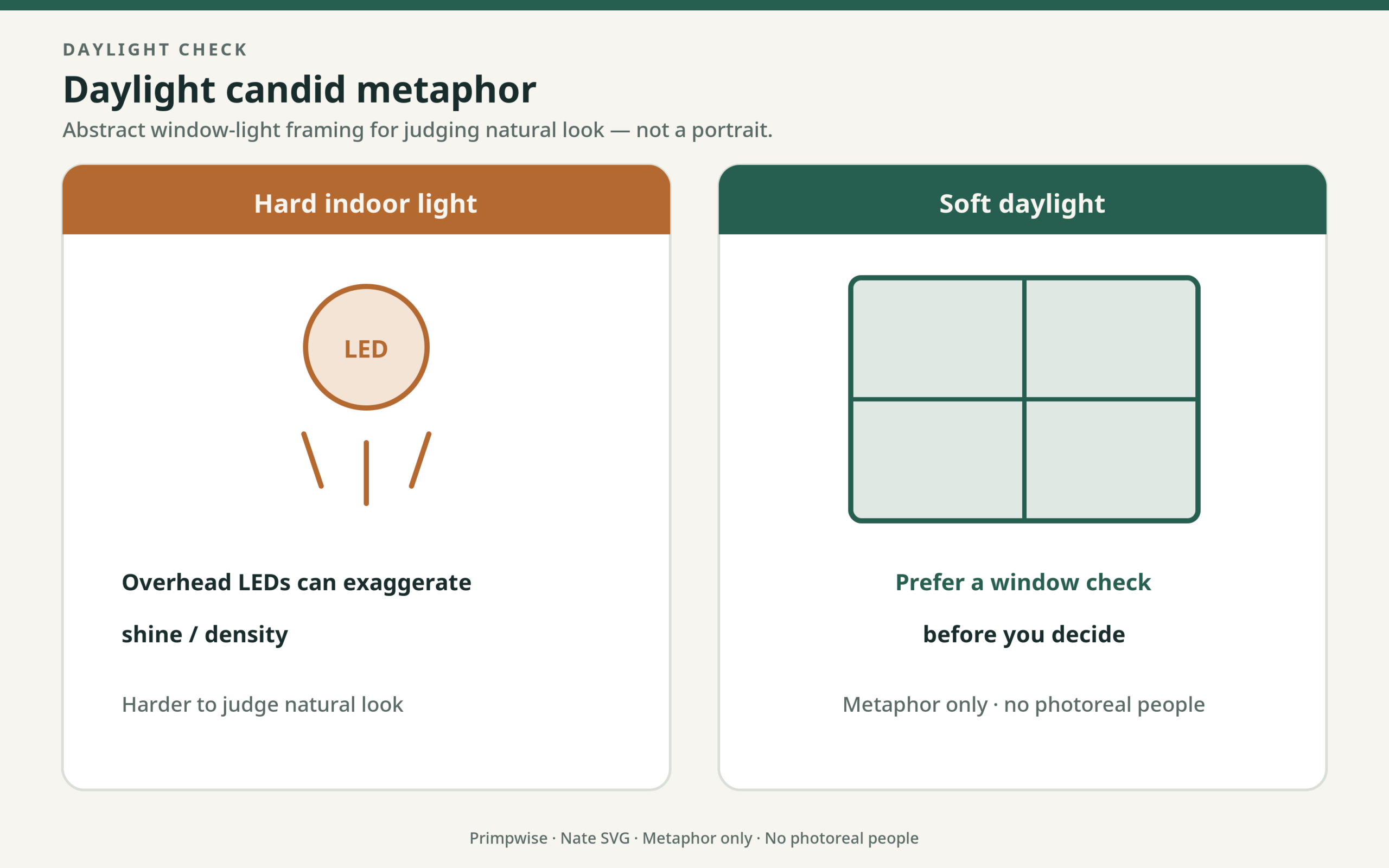
Noon sun and stage spots flatten shadows and sharpen the front edge. Thin-skin shine and dense lace fronts show more here. Helps: graduated density at the front, slight hairline irregularity, base color close to scalp, matte product. Most workdays and dinners are not this lighting.
Scenario 7: Gym and after sweat
Wet hair often looks more natural, not less. Sweat does not usually wash a cured bond off in one session; it shortens cycles over days. Heat under full poly is the comfort complaint; lace vents better — see gym workout guide and swimming guide.
The two tells that actually matter
After density and hairline themes across wearer communities, the same pair dominates:
| Tell | Fix |
|---|---|
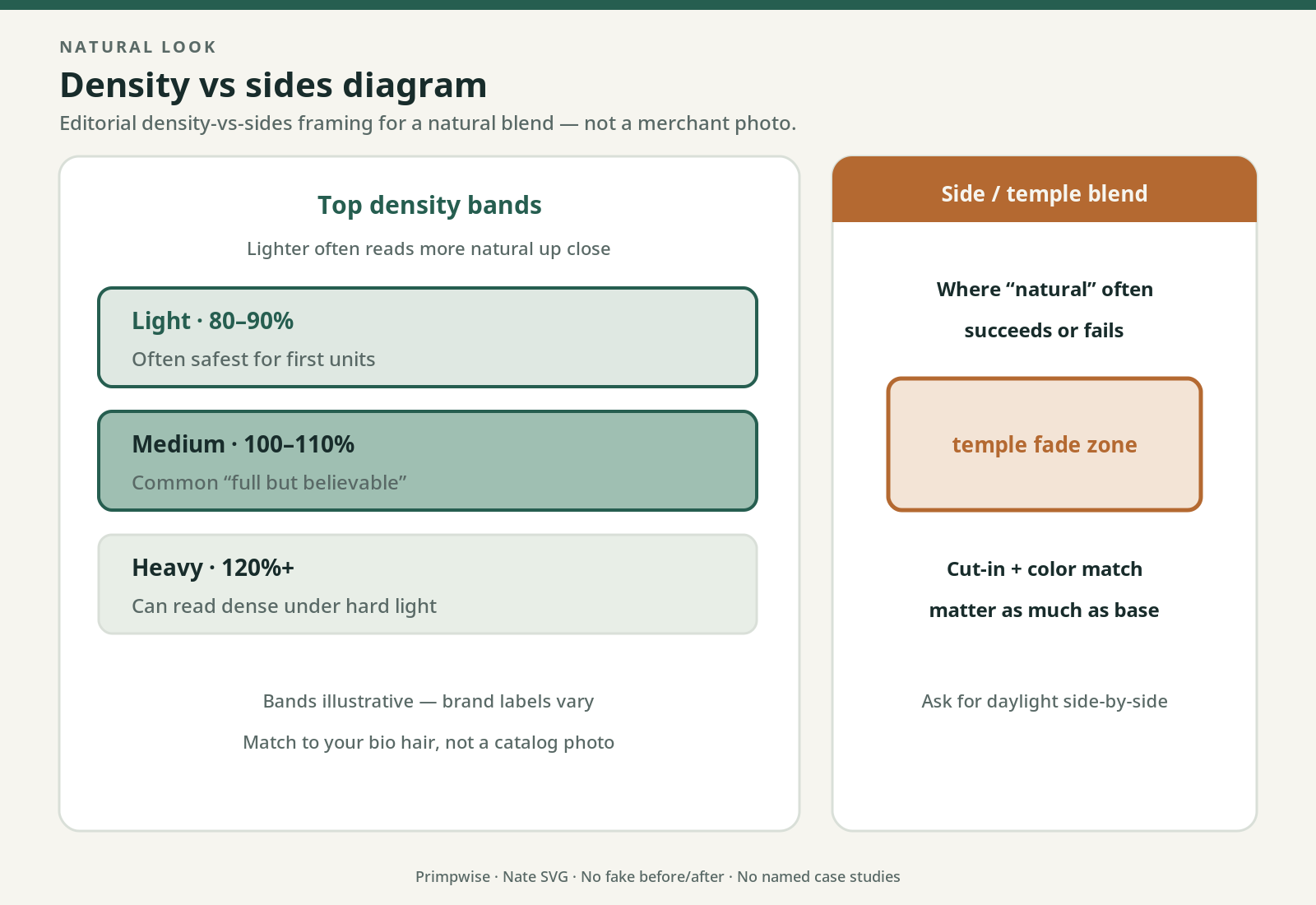
| Crown denser than sides | Match system density to bio sides/back; start light/light–medium; curly fiber reads fuller at the same % (SHP density guide) |
| Untrimmed / unblended front | Barber or self cut-in that softens the front and blends sides |
Optional Best-of spokes when the base family is already chosen: best lace hair systems for men · best thin skin hair systems for men.
Conditional shopping (after gates)
If lace / breathability / soft hairline under talk distance: Lordhair lace · Superhairpieces lace · LaVivid lace
If thin skin / scalp-like edge / simpler cleanup: Lordhair SuperSkin-V · Superhairpieces thin skin · LaVivid thin skin

Lordhair publicly frames thin V-loop skin stock as a common beginner-oriented natural-edge path — still verify thickness and density live (SuperSkin-V).
FAQ
Can people tell at a party?
Under normal indoor light and conversation distance, usually no — if density and hairline are managed. Direct overhead spots and aggressive close flash are the exceptions.
What makes a system look fake today?
Most often: over-density vs sides, an uncut uniform hairline, color too dark after bonding, and heavy shine under LEDs. Not “the fact that it is a system” by itself.
Will a partner notice?
Partners who are told often say they would not have guessed. Untold partners may take weeks. Physical mapping of the hairline is the highest-detection path — plan bond quality and boundaries accordingly.
Do systems show on video calls?
Webcam compression rarely resolves base detail. Matte finish and a stable silhouette matter more than microscopic lace inspection on Zoom or FaceTime. Office angle: office confidence.
Beginner path when “will it look fake?” is the only gate
Lock density and color before brand shopping. Prefer a stock unit that publishes clear density and base thickness, budget a cut-in, and read how to choose in order. Beginners shortlist: best hair systems for beginners. Education if the base family is still open: thin-skin guide · lace guide.
Confidence phases after the first uneventful weeks: confidence transformation. Touch and dating fears are separate spokes — do not collapse them into “it looks fake on the street.”
LaVivid’s public education on categories and cost bands is useful context when comparing published options (verify live) (LaVivid cost article).
Grey blend and age-appropriate density
Salt-and-pepper bio hair with a solid dark system reads fake faster than mesh ever will. Grey-blend stock options exist on multiple merchants — verify charts live. Over-50 buyers should bias lighter density so the piece does not sit like a helmet. Choosing path: how to choose.
Closing
Present-day natural look is a match and cut problem more than a brand slogan problem. Lock density, color, and hairline; pick lace vs thin skin for lifestyle; then shortlist brands on the men’s hub.
Image credits: Barber photo: Stock photo: Ryan Klaus / Pexels; Cover photo: Stock photo: LaTisha Guster / Pexels.
Diagrams: self-drawn by Polishwise.
Product images from Lordhair product pages, linked to the source pages.
Product images are merchant images, not photos taken by this site.